Photo by Marius Muresan on Unsplash

lors de

Understanding the French Phrase “lors de”

The phrase “lors de” is a formal preposition in French that translates to “during”, “at the time of”, or “on the occasion of” in English. It is often used in written or formal speech to refer to a specific event or moment in time. Unlike “pendant”, which can imply a duration, “lors de” typically focuses on a specific occurrence or point in time.

Meaning and Usage

  1. Indicating a Specific Moment:
    “Lors de” highlights a particular event or occasion.
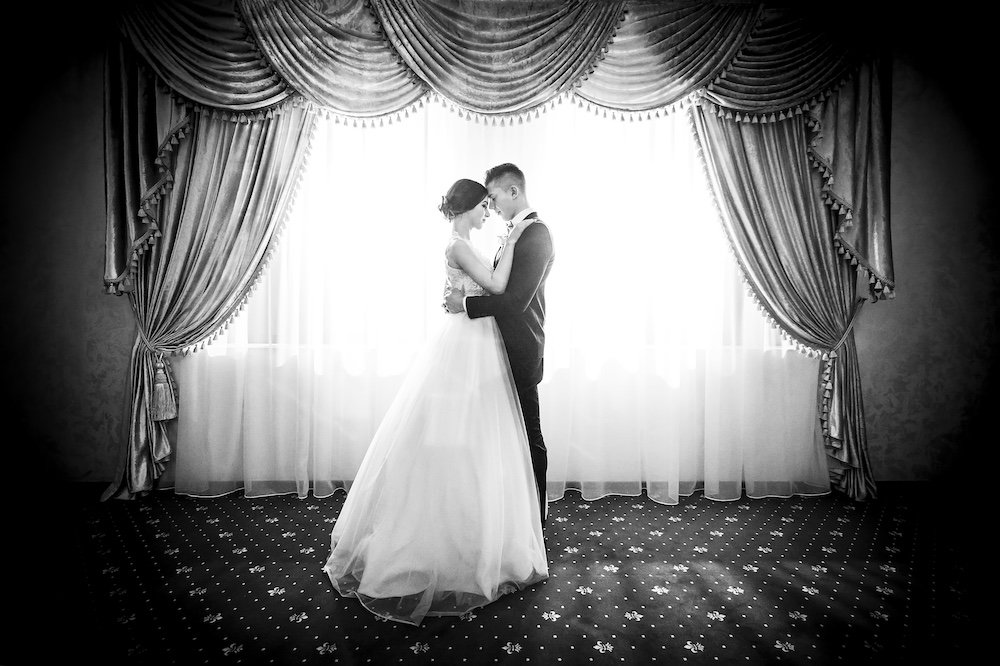
    • Lors de son mariage, elle portait une robe blanche.
      (During her wedding, she wore a white dress.)
  2. Formal Contexts:
    It is more formal than other prepositions like “pendant” or “au moment de”.
    • Le président a fait une annonce lors de la conférence de presse.
      (The president made an announcement during the press conference.)
  3. Followed by a Noun:
    “Lors de” is always followed by a noun or a pronoun and never by a verb.
    • Correct: Il a été blessé lors d’un accident.
      (He was injured during an accident.)
    • Incorrect: Il a été blessé lors de tomber.
      (He was injured during falling.)

Common Comparisons

  • “Lors de” vs. “Pendant”:
    Use “pendant” when emphasizing the duration of an action, and “lors de” for specific moments.
    • Il a dormi pendant le film.
      (He slept during the movie.)
    • Il a été distrait lors de la scène finale.
      (He was distracted during the final scene.)
  • “Lors de” vs. “Au moment de”:
    Both can refer to a specific point in time, but “au moment de” is less formal.
    • Elle a pleuré lors de la cérémonie.
      (She cried during the ceremony.)
    • Elle a pleuré au moment de dire au revoir.
      (She cried when it was time to say goodbye.)

Don’t miss new articles!

Get 1 email a week with new articles about French

We don’t spam! Read more in our privacy policy

Similar Posts

  • Reflexive (pronominal) verbs

    French reflexive verbs, also called pronominal verbs, are used when the subject of a sentence is also the object—when someone does something to themselves. These verbs are very common in everyday French and often describe actions related to daily routines, personal care, emotions, and social interactions. Many have both reflexive and non-reflexive forms, depending on…

  • hearing plurals 2

    Beyond articles, numbers, adjectives, verb agreement, liaison, and the small set of audibly irregular nouns, there are several additional mechanisms that allow a listener to perceive plurality in spoken French. Some are grammatical, others pragmatic, but all are genuinely used by native speakers. Quantifiers and expressions of quantity Many expressions of quantity obligatorily introduce plural…

  • quand même

    French uses quand même in several common ways. It can express concession, emphasis, impatience, mild reproach, surprise, or insistence. Its meaning depends on tone and context, but it consistently adds a sense of “despite this,” “all the same,” or “still.” It appears in both formal and informal registers and can modify an entire clause or…

  • jusqu’à

    Jusqu’à is a common French preposition meaning “until,” “up to,” or “as far as,” depending on context. It expresses a limit in time, space, quantity, or extent. Its form changes slightly when combined with certain words, producing variants such as jusqu’au, jusqu’aux, jusqu’en, and jusqu’à ce que. 1. Temporal use: “until” When referring to time,…

  • même

    The French word même is versatile and appears in several useful expressions. Here are some key phrases, their meanings, and examples of how to use them. Même (even, same) Used alone, même can mean “even” or “same.” Stress pronouns with même (myself, yourself, etc.) The construction [stress pronoun] + même means “myself,” “yourself,” etc., and…