de… en…
The French structure de… en… is a prepositional construction that expresses progression, repetition, or gradual transition. Some common equivalents in English include “from… to…,” “more and more…,” or “over time.”
This construction typically takes the form de + noun + en + (same or similar) noun, and it can be translated in several ways depending on the context.
Repetition or accumulation
In this usage, de… en… expresses the idea of repeated experiences or a growing trend. It often appears with abstract nouns.
D’étonnement en étonnement, il découvrait un monde nouveau.
From one surprise to the next, he discovered a new world.
De progrès en progrès, elle a fini par réussir.
Through steady progress, she eventually succeeded.
De découverte en découverte, ils ont reconstitué l’histoire.
From one discovery to another, they reconstructed the story.
De difficulté en difficulté, il a appris la patience.
From one difficulty to another, he learned patience.
Gradual intensification
This construction can also indicate something worsening or increasing over time. It is common with adjectives or nouns that describe intensities or states.
De pire en pire, la situation échappait à tout contrôle.
Worse and worse, the situation was spinning out of control.
Les enfants étaient de plus en plus bruyants, de minute en minute.
The children were louder and louder, minute by minute.
Son état empirait de jour en jour.
His condition was getting worse day by day.
De mal en pis, l’entreprise accumulait les pertes.
From bad to worse, the company was piling up losses.
Intermittent frequency
In this context, de… en… expresses something that happens now and then. It is common with time expressions.
De temps en temps, il lui écrivait une lettre.
From time to time, he wrote her a letter.
De jour en jour, l’atmosphère changeait.
From day to day, the atmosphere changed.
De semaine en semaine, on voyait les progrès.
From week to week, we could see the progress.
Movement or sequence
Sometimes the structure indicates physical movement or passing through stages. It suggests advancement or transition.
De page en page, le mystère s’épaissit.
From page to page, the mystery deepens.
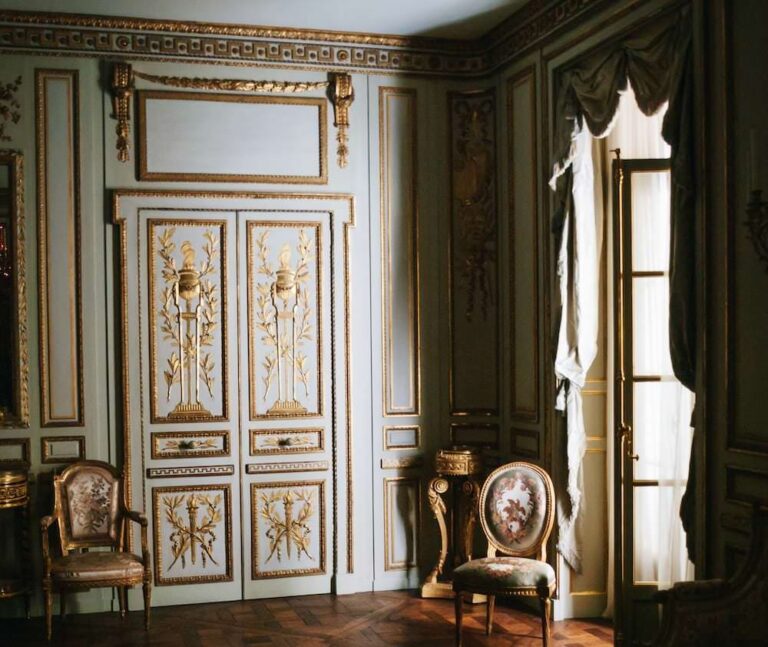
De salle en salle, les visiteurs découvrent l’exposition.
From room to room, visitors discover the exhibit.
Ils marchaient de village en village.
They walked from village to village.
Il a voyagé de pays en pays pendant des années.
He travelled from country to country for years.
Fixed expressions
Some phrases using de… en… are fixed and idiomatic.
De bouche en bouche
By word of mouth
De fil en aiguille
Little by little, gradually
De gré en gré
By mutual consent
De loin en loin
Every now and then
De plus en plus
More and more
De moins en moins
Less and less