Latin place names in France
Many French cities and regions have names that come directly from Latin, the language of the Roman Empire. When the Romans conquered Gaul, they founded new towns, renamed existing ones, and recorded these names in their documents and on their milestones. Some of these Latin names survived with little change, while others evolved into the modern French forms we know today.
Major cities and their Latin roots
- Lutetia (or Lutetia Parisiorum) – Paris. The name comes from a Latin word meaning “mud” or “swamp,” referring to the marshy ground near the Seine. In modern French, the city is sometimes called Lutèce in a poetic or historical context, though this name is not used in everyday speech. The city took its modern name from the Parisii, the local Gallic tribe, around AD 212.
- Massalia – Marseille. This was the Greek name for the city before the Romans arrived, and the Romans kept it.
- Lugdunum – Lyon. This was the capital of Roman Gaul and a major administrative centre. The name combines a Celtic god, Lug, with the Celtic word for hill or fortress.
- Burdigala – Bordeaux. A major city in the province of Aquitania.
- Tolosa – Toulouse. One of the important cities of the province of Narbonne.
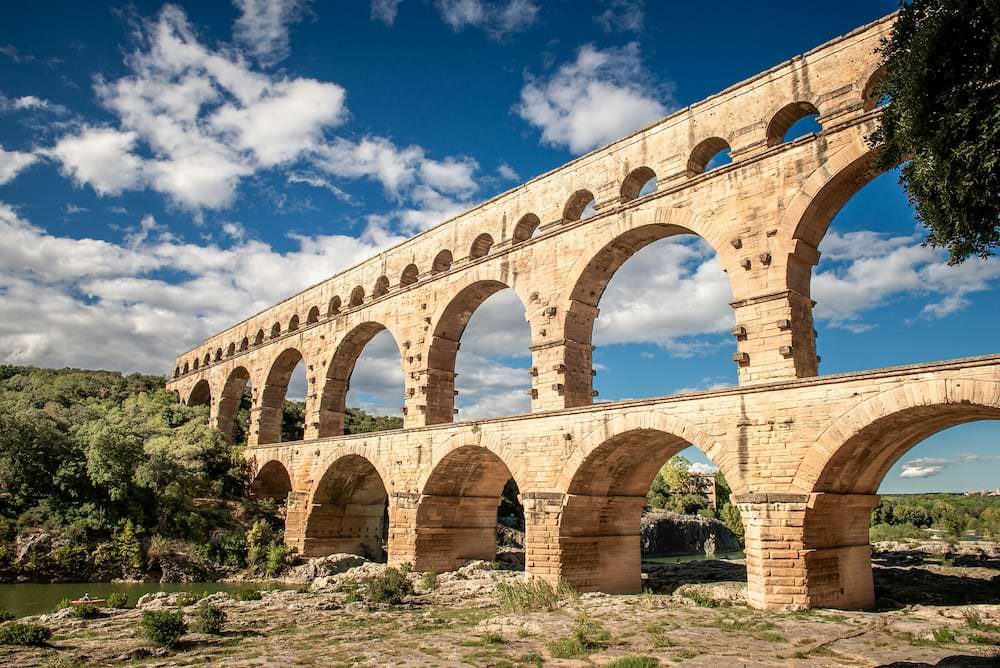
- Nemausus – Nîmes. A well-known Roman city with many surviving monuments.
- Augustodunum – Autun. Founded by the Emperor Augustus to replace the Gallic stronghold of Bibracte. The name means “Augustus’s fort.”
- Arelate – Arles. A key port city on the Rhône river.
- Gesoriacum or Bononia – Boulogne-sur-Mer. A port used for crossings to Britain.
- Durocortorum – Reims. The capital of the province of Gallia Belgica and the city where Roman emperors were often crowned.
- Mediolanum Santonum – Saintes. The chief town of the Santones tribe, in the region that later became Saintonge.
- Augustoritum – Limoges. Founded by Augustus, its name means “Augustus’s ford,” referring to a crossing point on the Vienne river.
- Civitas Turonum – Tours. Known in earlier Latin as Caesarodunum, the city later took its name from the Turones tribe.
- Rotomagus – Rouen. The main city of the Veliocasses tribe, located on the Seine.
- Noviomagus – Noyon or, in some cases, Nevers. The name means “new market” in Celtic and was used for several Roman towns.
- Vesontio – Besançon. A major fortified town in the province of Maxima Sequanorum.
- Cularo – Grenoble. Later renamed Gratianopolis after the Emperor Gratian, which evolved into the modern name.
- Vienna – Vienne (not Vienna, Austria). A major Roman city on the Rhône, south of Lyon.
- Carcaso – Carcassonne. A fortified town whose Latin name was Carcaso or Carcassona.
- Aginnum – Agen. A town in Aquitania on the Garonne river.
- Divodurum – Metz. The name means “hill of the gods” in Celtic, and the city was an important centre in Gallia Belgica.
Regional names in Latin
- Gallia – Gaul. The Roman name for the entire region that roughly corresponds to modern France, Belgium, and parts of neighbouring countries.
- Gallia Narbonensis – the southern province, also called Provincia, which gives us the modern name Provence. Its capital was Narbo Martius (Narbonne).
- Gallia Aquitania – Aquitaine, the southwestern part of Gaul.
- Gallia Lugdunensis – the central and northern region, with its capital at Lugdunum (Lyon).
- Gallia Belgica – the northeastern region, including parts of modern Belgium and the Rhineland.
- Maxima Sequanorum – the province around Besançon, named for the Sequani tribe.
- Alpes Graiae et Poeninae – the Alpine region near the passes into Italy.
How Latin names changed
The Roman names often followed a pattern. They could be based on:
- A local tribe, such as Lutetia Parisiorum (the Lutetia of the Parisii), Civitas Turonum (the city of the Turones), or Mediolanum Santonum (the plain of the Santones).
- A feature of the landscape, like Lutetia (swamp), Augustoritum (ford), or Aquae Sextiae (Aix-en-Provence, meaning “the waters of Sextius,” named for its thermal springs).
- The emperor who founded or renamed them, such as Augustodunum, Caesarodunum (Tours), or Gratianopolis (Grenoble).
- A Gallic stem for a hill, market, or plain, such as -dunum (hill), -magus (market), or -lanum (plain). Noviomagus (new market) and Divodurum (hill of the gods) are examples.
Over time, many of these names were shortened or altered. The ending -acus or -acum on many French town names, like Carnacum (Carnac), comes from a Gallo-Roman suffix indicating ownership or a place. The Latin -dunum often became -dun or -don in modern French, as in Verdun and Melun. Tribal names often replaced the original Latin place name, as happened with Paris (from Parisii), Tours (from Turones), and Reims (from Remi).
Examples of Latin city names in use
- Lutetia a été le lieu d’une assemblée des tribus gauloises en 53 av. J.-C. – “Lutetia was the site of an assembly of Gallic tribes in 53 BC.”
- Lugdunum était la capitale des trois Gaules. – “Lugdunum was the capital of the Three Gauls.”
- Augustodunum fut fondée par l’empereur Auguste. – “Augustodunum was founded by the Emperor Augustus.”
- Durocortorum était la ville où les empereurs romains étaient proclamés. – “Durocortorum was the city where Roman emperors were proclaimed.”
- Lutèce est souvent utilisée dans les romans historiques pour évoquer le Paris antique. – “Lutèce is often used in historical novels to evoke ancient Paris.”
Summary
The Latin names of French cities reveal a great deal about the Roman presence in Gaul. They fall into categories based on tribes, landscape, emperors, or local Celtic words. Many modern French city names are direct descendants of these Latin forms, though they have been altered by centuries of use. Understanding these old names gives a clearer picture of the history and geography of France under Roman rule.