faire le beau
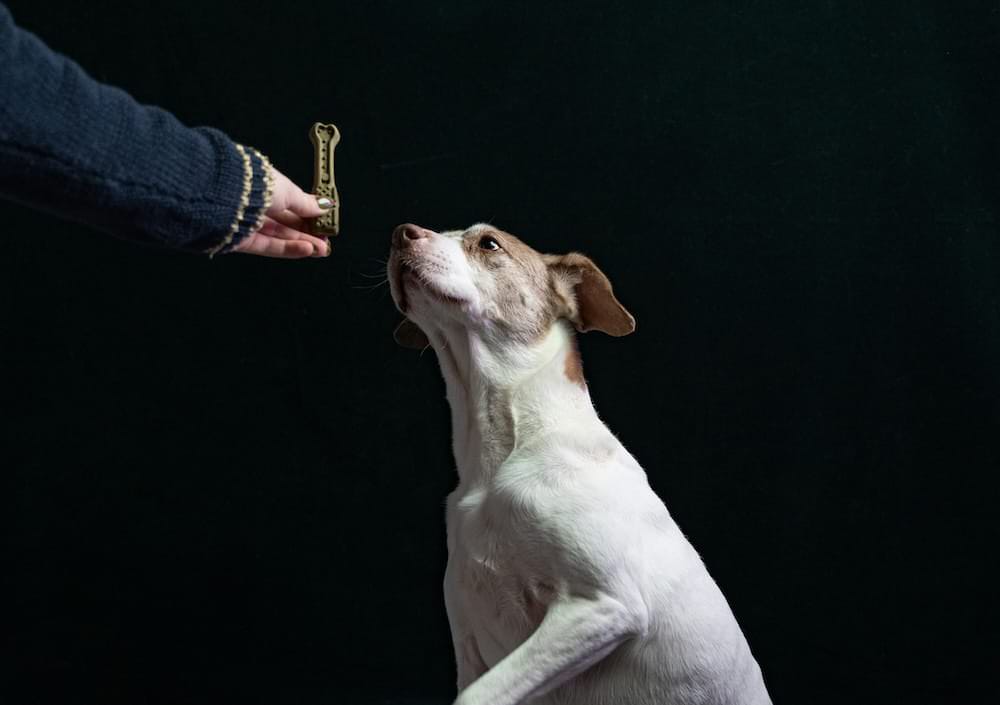
Faire le beau is a fixed French expression with two main uses. Its original, literal use applies to dogs and means to beg or sit up obediently to please someone. By extension, when applied to people, it means to show off, seek approval, flatter, or behave in an ingratiating way. The expression is common in spoken French and informal writing.
Literal use with animals
In its literal sense, faire le beau describes a trained behaviour, usually taught to dogs, where the animal adopts a pose meant to attract praise or a reward.
Examples:
- Le chien fait le beau pour avoir une friandise.
The dog begs to get a treat. - Apprends-lui à faire le beau.
Teach him to beg. - Le chiot fait le beau devant son maître.
The puppy begs in front of its owner.
This meaning is concrete and non-ironic.
Figurative use with people
When used about people, faire le beau is figurative and often mildly critical. It suggests behaviour designed to impress, please, or gain favour, sometimes excessively.
Examples:
- Il fait le beau devant son patron.
He is showing off in front of his boss. - Elle faisait le beau pour obtenir une promotion.
She was trying to ingratiate herself to get a promotion. - Arrête de faire le beau.
Stop trying to impress.
The implication is usually that the behaviour lacks sincerity.
Social and professional contexts
The expression is frequently used to comment on behaviour in hierarchical or evaluative situations.
Examples:
- Il fait le beau en réunion.
He puts on a show in meetings. - Les candidats faisaient le beau devant le jury.
The candidates were trying to impress the panel. - Il fait le beau dès qu’un responsable est présent.
He shows off whenever a manager is around.
In these contexts, the speaker distances themselves from the behaviour being described.
Irony and tone
Faire le beau often carries light irony or disapproval, though the tone depends on context and intonation.
Examples:
- Tu fais le beau aujourd’hui.
You are really trying to impress today. - Il a fait le beau toute la soirée.
He spent the whole evening showing off. - Elle fait le beau avec ses compliments.
She flatters with her compliments.
It is rarely complimentary when applied to adults.
Grammatical behaviour
The expression behaves like a normal verb phrase built on faire and conjugates accordingly.
Examples:
- Il fait le beau.
He shows off. - Ils faisaient le beau.
They were trying to impress. - Il a fait le beau.
He tried to ingratiate himself.
It is usually intransitive and does not take a direct object.
Synonyms and alternative expressions
Several French expressions convey similar ideas, depending on register and context.
Close alternatives:
- se faire bien voir
To try to be seen in a good light. - chercher à plaire
To seek approval. - flatter
To flatter. - cirer les bottes
To suck up. - lécher les bottes
To grovel.
Examples:
- Il cherche à plaire à ses supérieurs.
He is trying to please his superiors. - Il cire les bottes de son chef.
He sucks up to his boss.
Compared to these, faire le beau is relatively mild and often slightly humorous.
What faire le beau does not mean
Despite containing the adjective beau, the expression does not mean:
- to look attractive
- to dress well
- to behave politely in a neutral sense
Incorrect interpretations:
- Il fait le beau does not mean he looks handsome.
- Elle fait le beau does not mean she is elegant.
The focus is on performative behaviour aimed at approval.
Summary
- Faire le beau originally refers to a dog begging or posing obediently.
- Applied to people, it means showing off or seeking favour.
- The expression often carries irony or mild criticism.
- It is common in spoken French and informal contexts.
- Several alternatives exist, ranging from neutral to strongly critical.