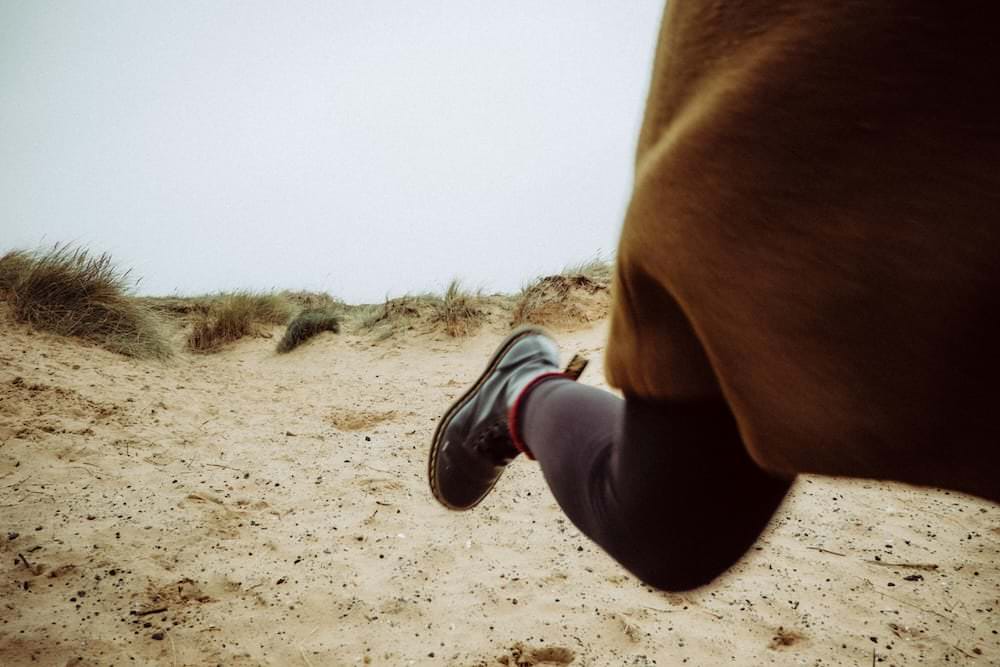
fuir vs s’enfuir
The verbs fuir and s’enfuir both mean “to flee” or “to run away,” but they differ in grammatical structure, transitivity, and meaning. Fuir focuses on what is being fled from, while s’enfuir focuses on the act of escaping itself.
Fuir
Fuir is a transitive or intransitive verb. It is used when the emphasis is on the thing or person being fled. It can also have a figurative meaning such as “to avoid” or “to shun.”
Conjugation (present tense):
je fuis, tu fuis, il fuit, nous fuyons, vous fuyez, ils fuient
Common meanings:
- To flee or escape something
- To avoid something or someone
Examples:
- Il fuit la police. — He is fleeing the police.
- Les prisonniers ont fui la prison. — The prisoners fled the prison.
- Il fuit le danger. — He runs away from danger.
- Elle fuit les responsabilités. — She avoids responsibilities.
- Elle fuit la réalité. — She avoids reality.
Fuir can be used figuratively to mean “to avoid” in a psychological or moral sense, which s’enfuir cannot.
S’enfuir
S’enfuir is a reflexive verb (se + enfuir). It is always intransitive and usually refers to running away from a place or situation. It highlights the act of flight rather than the object of escape.
Conjugation (present tense):
je m’enfuis, tu t’enfuis, il s’enfuit, nous nous enfuyons, vous vous enfuyez, ils s’enfuient
Common meanings:
- To run away
- To escape from a place
Examples:
- Le voleur s’est enfui. — The thief ran away.
- Les oiseaux s’enfuient dès qu’on approche. — The birds fly away as soon as you approach.
- Elle s’est enfuie de la maison. — She ran away from home.
- Ils se sont enfuis pendant la nuit. — They escaped during the night.
- Dès qu’il l’a vue, il s’est enfui. — As soon as he saw her, he ran away.
S’enfuir is often followed by de when specifying the place left behind.
Comparison
| Aspect | Fuir | S’enfuir |
|---|---|---|
| Type | Transitive or intransitive | Reflexive (intransitive) |
| Focus | What is fled or avoided | The act of escaping |
| Common prepositions | None, or devant in some expressions | de (to indicate origin of escape) |
| Figurative use | Yes, e.g. fuir la réalité | No |
| English equivalent | to flee, to avoid, to escape something | to run away, to flee (from somewhere) |
Parallel examples
- Le prisonnier a fui la prison. — The prisoner fled the prison.
- Le prisonnier s’est enfui de la prison. — The prisoner ran away from the prison.
Both sentences are correct. The first focuses on the prison as the thing escaped from; the second focuses on the act of running away.
Figurative meaning
Only fuir is used in figurative contexts:
- Fuir les conflits — to avoid conflicts
- Fuir ses problèmes — to avoid one’s problems
- Fuir les responsabilités — to shirk responsibilities
It would be incorrect to use s’enfuir in these examples.
Summary
- Fuir means “to flee” or “to avoid” something. It may be literal or figurative, and it can take a direct object.
- S’enfuir means “to run away” or “to escape,” with emphasis on the action itself. It is reflexive and never takes a direct object.
- Fuir la police = to flee the police.
- S’enfuir de la police = to run away from the police.