Faire tintin

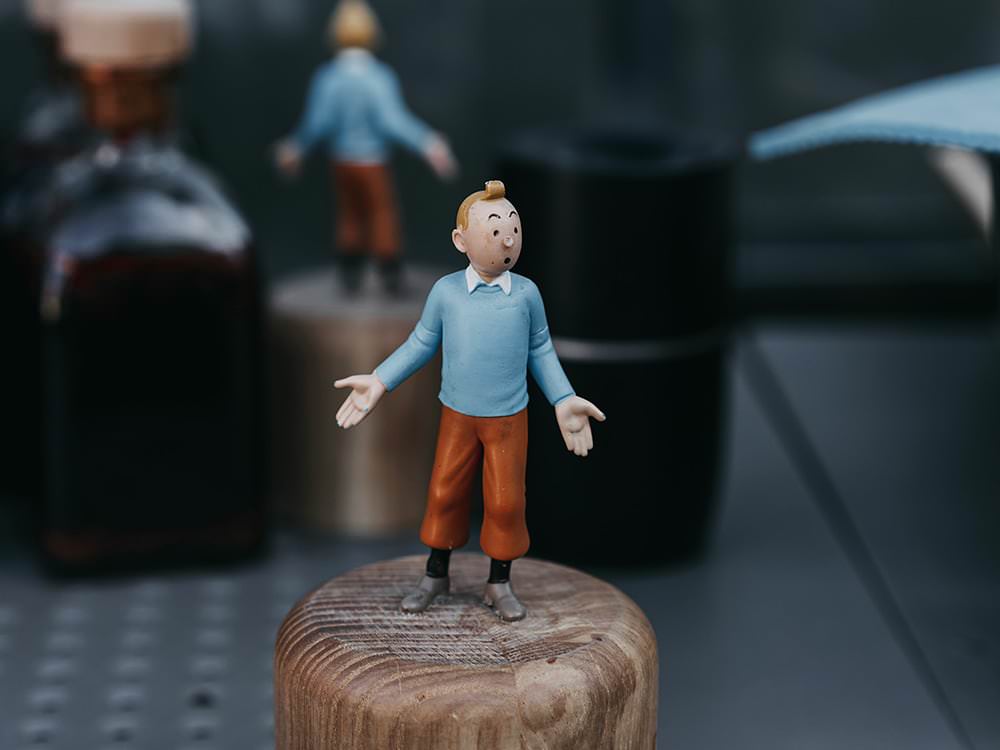
“Faire tintin” means to be frustrated or deprived, to receive nothing when you were expecting something. Despite the illustration above, this saying has nothing to do with the comic book character Tintin. He was created in 1929, but the word “tintin” dates back to the 13th century. It originally referred to the noise of objects jingling together, such as coins or metallic jewellery.

It is not known how “tintin” came to be associated with frustration or deprivation, although there are some theories. One is that the word evokes the frustration of sounding a doorbell but discovering no one is home. Another is that it is the sound of money that one cannot possess. And another is that is refers to a sound indicating failure, such as the bell that rings at the end of a boxing round.

Associated expressions include “ça va être tintin” which means “it won’t be possible,” as well as the simple “tintin !” meaning “nothing at all!”


Don’t miss out on new posts – subscribe now!

Don’t miss new articles!

Get 1 email a week with new articles about French

We don’t spam! Read more in our privacy policy

Similar Posts

  • à couteaux tirés

    The French saying “à couteaux tirés” means literally “at knives drawn,” or “with knives drawn.” What it actually means is a situation of open war, or great tension, or great hostility, or diametrically opposed. The idiom dates back to the end of the 17th century. Historically, arguments were often “resolved” with knives or daggers. So…

  • verb: râler

    Meaning The primary meaning of the French verb “râler” is “to grumble” or “to complain.” It is used to express dissatisfaction, annoyance, or frustration, often in a vocal or audible manner. However, “râler” can take on several additional meanings depending on the context: Conjugation “Râler” belongs to the group of regular “-er” verbs, and its…

  • mine de rien

    “Mine de rien” is a popular French expression that is used in everyday conversations. Literally translated, it means “appearance of nothing,” “expression of nothing,” or “look of nothing,” but its true meaning goes beyond its literal interpretation. This expression is often used to describe someone’s behavior or attitude when they are doing something in a…

  • avoir

    The second most frequently used verb in French is “avoir,” which means “to have.” It can also be used to talk about how old someone is. “Avoir” is an essential verb to know. “Avoir” is also used to express age. For instance: