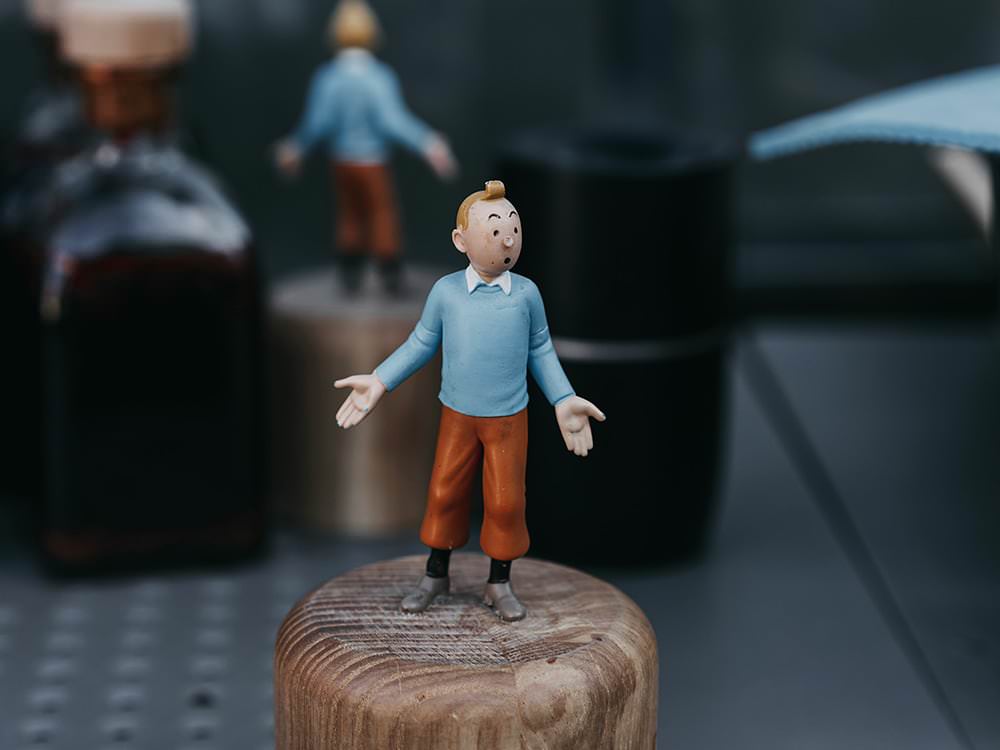
Faire tintin

“Faire tintin” means to be frustrated or deprived, to receive nothing when you were expecting something. Despite the illustration above, this saying has nothing to do with the comic book character Tintin. He was created in 1929, but the word “tintin” dates back to the 13th century. It originally referred to the noise of objects jingling together, such as coins or metallic jewellery.

It is not known how “tintin” came to be associated with frustration or deprivation, although there are some theories. One is that the word evokes the frustration of sounding a doorbell but discovering no one is home. Another is that it is the sound of money that one cannot possess. And another is that is refers to a sound indicating failure, such as the bell that rings at the end of a boxing round.

Associated expressions include “ça va être tintin” which means “it won’t be possible,” as well as the simple “tintin !” meaning “nothing at all!”


Don’t miss out on new posts – subscribe now!

Don’t miss new articles!

Get 1 email a week with new articles about French

We don’t spam! Read more in our privacy policy

Similar Posts

  • bec et ongles

    The French saying “bec et ongles” derives its origin from the Latin expression “rostrum et unguibus,” which also means “beak and nails.” This ancient phrase refers to the beak, symbolizing the fierceness and determination of a bird, and the nails, representing strength and tenacity. Throughout history, birds have often been associated with bravery and courage,…

  • waiting for the penny to drop

    Not all English idiomatic expressions have a direct French translation. It is a common mistake to translate an English expression directly into French. This can cause confusion for the listener, leading to total bafflement or misunderstanding. The English idiom “waiting for the penny to drop” describes the moment when someone finally understands something that wasn’t…

  • appel du pied

    An “appel du pied” literally means a “call of the foot” but actually means a discrete invitation, a seduction attempt, an allusive proposal or simply an invitation. Its origin is unknown. There is a related term that exists in the world of fencing with swords, but it doesn’t seem to be linked to this usage….

  • Avoir d’autres chats à fouetter

    “Avoir d’autres chats à fouetter” means literally “to have other cats to whip.” But in English, this would translate to “to have other fish to fry” or “to have better/more important things to do.” The origin of this expression is unknown. However other expressions involving whipped cats do exist: “éveillée comme un chat qu’on fouette”…