Du tac au tac

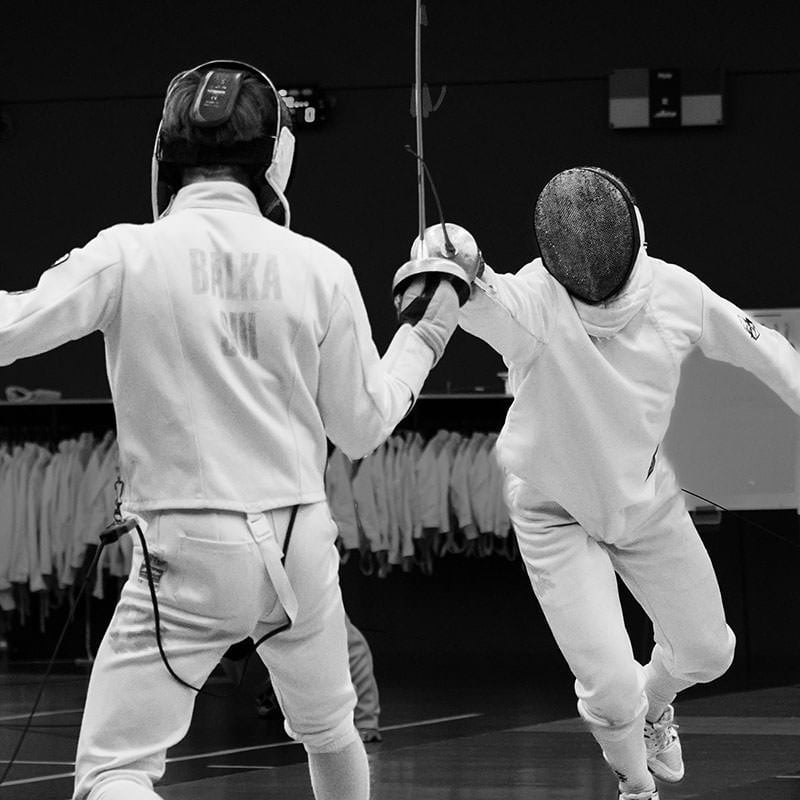
“Du tac au tac” is a French expression meaning immediately, with vivacity, like lightning, scathingly, or with a quick response. It has nothing to do with Tic Tacs or Tiktok. It comes from the world of fencing. In fencing, to retaliate “du tac au tac” means to reply immediately to an assault. The word “tac” refers to the sound that the blades of the fencing swords make when they strike each other.

A French book that discusses fencing and “du tac au tac” in some detail is “Les armes et le duel” (Weapons and the Duel) by Augustin Grisier. It also contains a preface by Alexandre Dumas, author of “The Three Musketeers” and “The Count of Monte Cristo.”

Don’t miss out on new posts – subscribe now!

Don’t miss new articles!

Get 1 email a week with new articles about French

We don’t spam! Read more in our privacy policy

Similar Posts

  • verb: dessiner

    Meaning The primary meaning of the French verb “dessiner” is “to draw,” “to design,” “to map out,” “to outline,” “to depict” or even “to portray.” For example, “Il a su dessiner un tableau vivant de la scène.” Conjugation “Dessiner” is a regular “-er” verb, meaning it follows the typical conjugation patterns for this type of…

  • mordre la poussière

    The French expression “mordre la poussière” translates literally to “to bite the dust” in English and carries similar connotations. It is used to refer to defeat, failure, or death. Meaning “Mordre la poussière” typically conveys: Origins The expression has ancient roots dating back to Homer’s Iliad, where fallen warriors were described as “biting the earth”…

  • en catimini

    “En catimini” is a French expression that means furtively, stealthily, on the sly or discreetly. It dates back to the second half of the 14th century. The word “catimini” is often linked to the Greek word “katamenia” which means menstruation. The idea being that women of the era kept their menstrual status largely to themselves….

  • Avoir de la veine

    “Avoir de la veine” means to be lucky or to have luck. “Une veine” is a vein. So what is the connection between veins and luck? The term comes from the world of men who searched for gold, diamonds or other precious metals. These metals and diamonds are found in concentrations in rock called “veins.”…

  • être en train de

    In French, there is no direct equivalent to the English present continuous (“I am eating”) or past continuous (“I was eating”). Instead, French speakers use the construction “être en train de” + infinitive to emphasize that an action is (or was) in progress. This guide will cover how to use it in both the present…

  • passer l’éponge

    Passer l’éponge means literally to pass the sponge, but in slightly better English it would be to wipe the sponge. The English saying it most closely resembles would be “to wipe the slate clean.” It means to restart from zero, to forgive, or to forget disagreeable acts. The expression dates back to the start of…

Leave a Reply

Your email address will not be published. Required fields are marked *