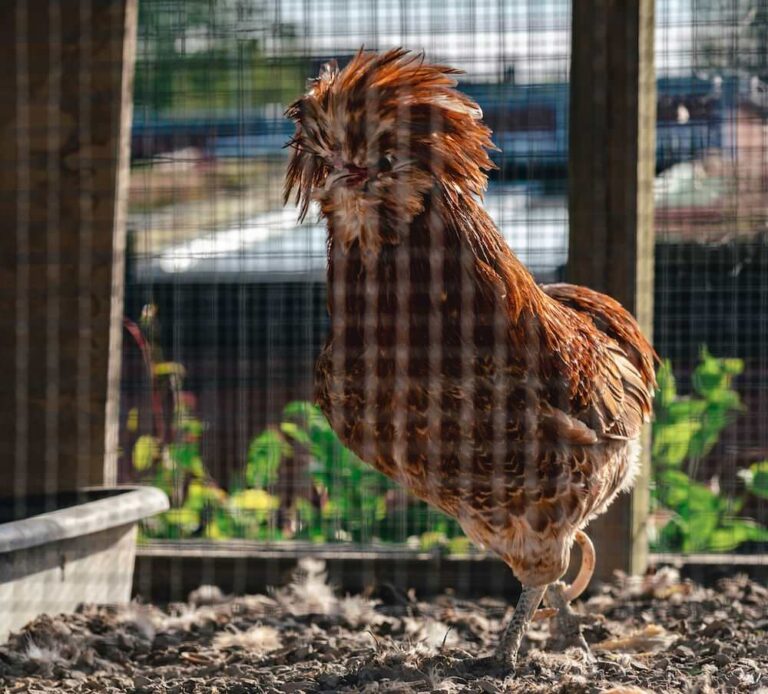
faire une frite

The French expression “faire une frite” literally means “to make a fry” or “to make a French fry.” However it has nothing to do with cooking. Instead it means to use the backs of your fingers to whip someone’s bottom in a downwards direction. This action, often done by kids teasing each other, will leave temporary marks that resemble French fries on the recipient’s backside.


Don’t miss new articles!

Get 1 email a week with new articles about French

We don’t spam! Read more in our privacy policy

Similar Posts

  • c’est for people

    C’est is one of the most common expressions in French. It comes from ce (this, that) plus est (is), and it literally means “it is” or “this is.” English speakers usually reach for “he is” or “she is” when talking about a person, but French often reaches for c’est instead. This is not a mistake…

  • jusqu’à

    Jusqu’à is a common French preposition meaning “until,” “up to,” or “as far as,” depending on context. It expresses a limit in time, space, quantity, or extent. Its form changes slightly when combined with certain words, producing variants such as jusqu’au, jusqu’aux, jusqu’en, and jusqu’à ce que. 1. Temporal use: “until” When referring to time,…

  • expressions with faire du

    Many French sports and leisure activities are expressed with the structure faire du, faire de la or faire de l’ followed by the activity noun. English often uses a verb such as ski, cycle, sail or swim, whereas French frequently uses faire plus a noun phrase. This construction covers a wide range of activities, including…

  • verbs with de

    The requirement for certain French verbs to be followed by “de” is largely based on historical language development and convention. This preposition often indicates a relationship of origin, separation, or source between the verb and what follows it. 42 most used French verbs requiring “de”: General Rule: The pronoun “en” typically replaces “de + noun”…

  • ils vs elles

    French uses the masculine plural as the default when a group includes at least one male. This applies to pronouns, adjectives, and past participles. the basic rule If a group has both males and females, the pronoun is ils, even if there is only one male. This rule is standard in modern French. when to…

  • unless

    The English conjunction unless expresses a condition that prevents something from happening. In French, there is no exact one-word equivalent. It is typically translated using the conjunction à moins que, which requires the subjunctive mood. Other constructions are possible depending on formality, register, and clarity, including sauf si, excepté si, si ce n’est que, and…