x pronunciation
The French letter x does not have one fixed sound. It can be pronounced ks, gz, z, sometimes s, and in many words it is not pronounced as a separate letter at all in any simple way. The sound depends on word structure and word history.
X pronounced like “ks”
This is the most common value of x in French spelling. It appears in the middle of many words and also in some words beginning with x, especially xy- words.
Examples:
- Taxi – “Taxi”
- Texte – “Text”
- Fixer – “To fix”
- Flexible – “Flexible”
- Complexe – “Complex”
- Excellent – “Excellent”
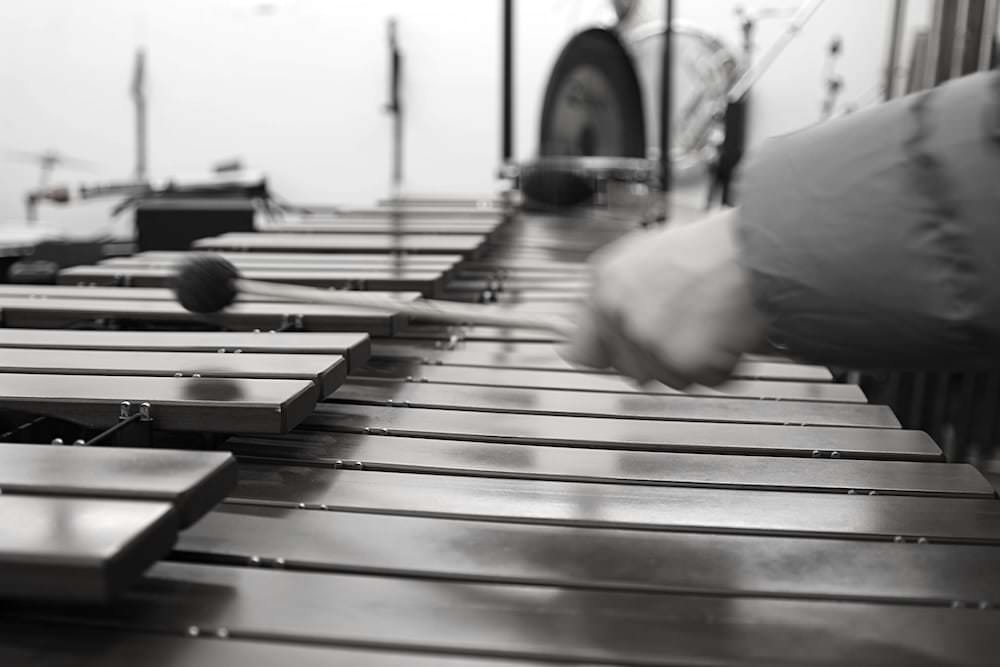
- Xylophone – “Xylophone”
- Xylème – “Xylem”
- Xylophage – “Wood-eating”
Example phrases:
- J’ai pris un taxi. – “I took a taxi.”
- Ce texte est difficile. – “This text is difficult.”
- Il faut fixer le problème. – “We must fix the problem.”
- C’est une situation complexe. – “It is a complex situation.”
- Le xylophone est dans la salle de musique. – “The xylophone is in the music room.”
- Cet insecte est xylophage. – “This insect eats wood.”
In many words this comes directly from Latin x or from Greek forms where x already represented a ks sound.
X pronounced like “gz”
This is very common in ex- words when x is followed by a vowel sound or a mute h. In these cases the x is voiced and becomes gz. This is often (but not exclusively) found in French words of Latin origin, rather than of Greek origin.
Examples:
- Exemple – “Example”
- Examen – “Exam”
- Exiger – “To demand”
- Exister – “To exist”
- Exotique – “Exotic”
- Exact – “Exact”
- Exagérer – “To exaggerate”
Example phrases:
- Donnez un exemple. – “Give an example.”
- J’ai un examen demain. – “I have an exam tomorrow.”
- Le professeur exige du silence. – “The teacher demands silence.”
- Il existe une solution. – “A solution exists.”
- C’est une plante exotique. – “It is an exotic plant.”
A useful working pattern is:
- ex + vowel sound often becomes egz
- ex + consonant often stays eks
This is not perfect in every case, but it holds often enough to guide learners.
X pronounced like “z”
This occurs in a few common grammatical and lexical situations, especially in numbers and in ex- words where the consonant has softened between vowels.
Examples:
- Deuxième – “Second”
- Sixième – “Sixth”
- Dixième – “Tenth”
Example phrases:
- C’est la deuxième fois. – “It is the second time.”
- Il est en sixième. – “He is in sixth grade.”
- C’est la dixième personne. – “It is the tenth person.”
The z sound appears because French prefers smooth linking between vowel sounds in these forms.
X pronounced like “s” or changing in numbers
In the words six and dix, the final x can change depending on context.
Examples:
- Six – “Six” [SEESS]
- Dix – “Ten” [DEESS]
Example phrases:
- J’ai six livres. – “I have six books.” [SEE]
- Il a dix voitures. – “He has ten cars.” [DEE]
- Six amis sont venus. – “Six friends came.” [SEE ZAH MEE SOn VE NUU]
Before a consonant or pause, six and dix are often pronounced with a final s sound (SEESS, DEESS). Before a vowel, they often link with a z sound (six amis → SEE ZAH MEE).
Silent x in spelling (no sound for the letter itself)
In some words, the letter x is not pronounced as a separate sound. The pronunciation is fixed historically and is not built from sounding out the letter.
Examples:
- Paix – “Peace” [PAY/PEH]
- Choix – “Choice” [SHWAH]
- Noix – “Walnut” [NWAH]
- Prix – “Price” [PREE]
- Croix – “Cross” [KRWAH]
Example phrases:
- Je veux la paix. – “I want peace.”
- Quel choix difficile. – “What a difficult choice.”
- Le prix est élevé. – “The price is high.”
- La croix est ancienne. – “The cross is old.”
These words come from older French forms where final consonants were reduced or lost in speech, while spelling kept older traces.
Place names with final x
Place names often preserve old spellings. The final x is usually not pronounced as a distinct letter.
Chamonix
Chamonix is pronounced roughly SHAH MOH NEE. The final x is not sounded.
Example:
- Je vais à Chamonix cet hiver. – “I am going to Chamonix this winter.”
Aix-en-Provence
Aix is pronounced roughly eks. The spelling contains a final x, but it is not pronounced as a separate letter. The sound of the word comes from its historical development as a whole.
Example:
- Elle habite à Aix-en-Provence. – “She lives in Aix-en-Provence.”
Liaison with final x
Even when final x is silent in isolation, it may produce a z sound in liaison before a vowel.
Examples:
- Deux amis – “Two friends” [DEr ZAH MEE]
- Six enfants – “Six children” [SEE ZOn FOn]
- Dix ans – “Ten years” [DEE ZOn]
Compare:
- J’ai deux livres. – “I have two books.” [JAY DEr LEEV rer]
- J’ai deux amis. – “I have two friends.” [JAY DEr ZAH MEE]
Summary
- X can be pronounced ks, gz, z, or be silent in spelling.
- Xylophone and xy- words use ks.
- Ex- before vowels often becomes gz, as in exemple, exiger, examen.
- Six and dix change pronunciation depending on context.
- Many final x letters are not sounded, especially in older words and place names.
- Liaison can turn final x into a z sound before vowels.