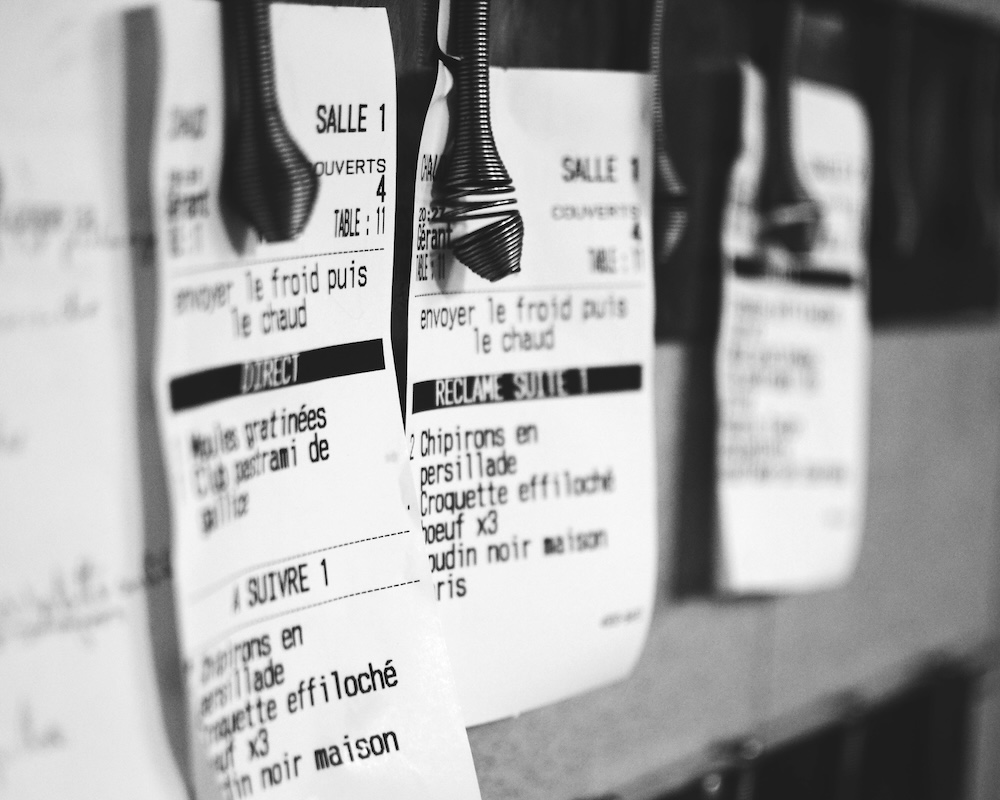
receipt
The French language offers several ways to say “receipt,” and which term you use often depends on where in the French-speaking world you are. The most common words are ticket, reçu, and facture, each with distinct meanings and regional preferences.
The main terms
Ticket is the everyday word for a receipt in France, Belgium, and Switzerland. You will hear it in shops, restaurants, and petrol stations. It comes from English and has been fully adopted into French. Many French speakers use it without thinking of it as a borrowed word.
Reçu is the formal word for a receipt, particularly one that proves payment or the receipt of goods or money. It is used across all French-speaking regions but appears more often in official or legal contexts. A landlord might give you a reçu for rent payment. A doctor’s office might provide a reçu for fees paid.
Facture means an invoice or bill, not strictly a receipt, but French speakers sometimes use it to mean a receipt in certain contexts. It refers to a detailed statement of charges for goods or services provided.
Regional preferences
France
In mainland France, ticket dominates everyday speech. Walk into a supermarket and ask for your receipt, and the cashier will hand you a ticket. This applies to receipts from shops, cafés, restaurants, and petrol stations.
Reçu appears in more formal situations. A bank might issue a reçu for a deposit. A landlord will provide a reçu for rent. Professionals like lawyers, accountants, and doctors use reçu when documenting payments.
Examples in context:
- Je dois garder mon ticket pour la garantie. – “I need to keep my receipt for the warranty.”
- Le boulanger m’a donné un ticket. – “The baker gave me a receipt.”
- Pouvez-vous me donner un reçu pour cette facture ? – “Can you give me a receipt for this invoice?”
- J’ai reçu un reçu de paiement de mon assurance. – “I received a payment receipt from my insurance.”
Belgium
Belgian French shows similar patterns to mainland France, with ticket used for everyday purchases and reçu for formal documentation. However, some Belgians prefer reçu even in casual retail settings more often than their French counterparts do.
Examples in context:
- Je dois demander un ticket à la caisse. – “I need to ask for a receipt at the till.”
- Avez-vous un reçu pour mon paiement ? – “Do you have a receipt for my payment?”
Switzerland
Swiss French uses ticket for casual retail receipts but reçu appears frequently in everyday speech as well. Switzerland’s three official languages (French, German, and Italian) mean that some Swiss French speakers may also use Quittung (the German word for receipt) or adapt it to quittance in French.
Examples in context:
- Puis-je avoir un ticket, s’il vous plaît ? – “Can I have a receipt, please?”
- Le magasin m’a donné un reçu détaillé. – “The shop gave me a detailed receipt.”
Quebec and French-speaking Canada
Quebec and other French-Canadian regions use reçu more consistently than France does, even for everyday purchases. Ticket exists but feels less natural to many Quebec speakers. Some older or more traditional speakers might use récépissé, an older French word meaning a written acknowledgement.
Examples in context:
- Je vais garder mon reçu. – “I’m going to keep my receipt.”
- Pouvez-vous me donner un reçu pour cette achat ? – “Can you give me a receipt for this purchase?”
- J’ai besoin d’un récépissé pour la douane. – “I need a receipt for customs.”
African French-speaking countries
In countries like Senegal, Côte d’Ivoire, and the Democratic Republic of Congo, reçu is standard. Ticket is understood but less common. French colonial history shaped these preferences, and formal documentation remains important in commerce and administration.
Examples in context:
- Demandez un reçu au vendeur. – “Ask the seller for a receipt.”
- Ce reçu prouve que j’ai payé. – “This receipt proves that I paid.”
Synonyms and alternative expressions
Several other words can refer to receipts depending on context:
Bon (literally “voucher” or “good”) sometimes appears for receipts in older or regional French, though it is less common now. Un bon de caisse is an older expression for a till receipt.
Quittance means a formal written acknowledgement of payment, especially for rent or utilities. It is more formal than reçu.
Examples in context:
- Le propriétaire exige une quittance de loyer. – “The landlord requires a rent receipt.”
- Voici une quittance pour votre paiement d’électricité. – “Here is a receipt for your electricity payment.”
Bordereau refers to a detailed slip or receipt, often used in banking or official transactions.
Example in context:
- Veuillez signer ce bordereau. – “Please sign this receipt slip.”
Attestation means a certificate or proof, and can refer to a receipt in formal contexts.
Example in context:
- L’école m’a donné une attestation de paiement des frais. – “The school gave me a proof of payment receipt for fees.”
Receipts in specific contexts
Restaurants and cafés
In France, a server brings you the l’addition (the bill) rather than the receipt. Once you pay, you might receive a ticket or reçu as proof of payment, though many small cafés do not provide one unless asked.
Example in context:
- Apportez-moi l’addition, s’il vous plaît. – “Bring me the bill, please.”
- Pouvez-vous me donner un reçu ? – “Can you give me a receipt?”
In Quebec, servers also use l’addition, but receipts are more commonly provided.
Pharmacies
Pharmacies across French-speaking regions provide reçu rather than ticket, as they dispense medications and need formal records.
Example in context:
- Le pharmacien m’a donné un reçu avec la liste des médicaments. – “The pharmacist gave me a receipt with a list of medications.”
Online shopping
Online retailers typically send facture (invoices) rather than receipts. A receipt confirmation appears in email. French speakers might say they received a reçu de commande (order receipt) or simply refer to the email as the reçu.
Example in context:
- Avez-vous reçu un reçu de commande par courriel ? – “Did you receive an order receipt by email?”
Tax and legal documents
For tax purposes, a facture (invoice) serves as the official record. A reçu or quittance proves payment. Accountants and lawyers distinguish carefully between these documents.
Example in context:
- Vous devez conserver toutes vos factures pour vos impôts. – “You must keep all your invoices for your taxes.”
- Une quittance prouve le paiement de la facture. – “A receipt proves payment of the invoice.”
Age of terms and modern usage
Ticket entered French in the 19th century and gained widespread use after World War II as retail expanded. Older French speakers sometimes resisted it, but it is now standard. Reçu has been in French for centuries, derived from Latin receptus (received).
Modern French increasingly uses ticket for everyday purposes, reflecting the spread of supermarkets and mass retail. Formal and administrative contexts stick with reçu and quittance.
Summary
Ticket dominates in everyday French retail across France, Belgium, and Switzerland. Reçu is used for formal documents and is more common in Quebec and African French-speaking countries. Quittance refers to formal payment receipts for rent and utilities. Facture is technically an invoice but may be used loosely to mean receipt. Regional differences are less about completely different words and more about which term speakers prefer in daily life versus official contexts.