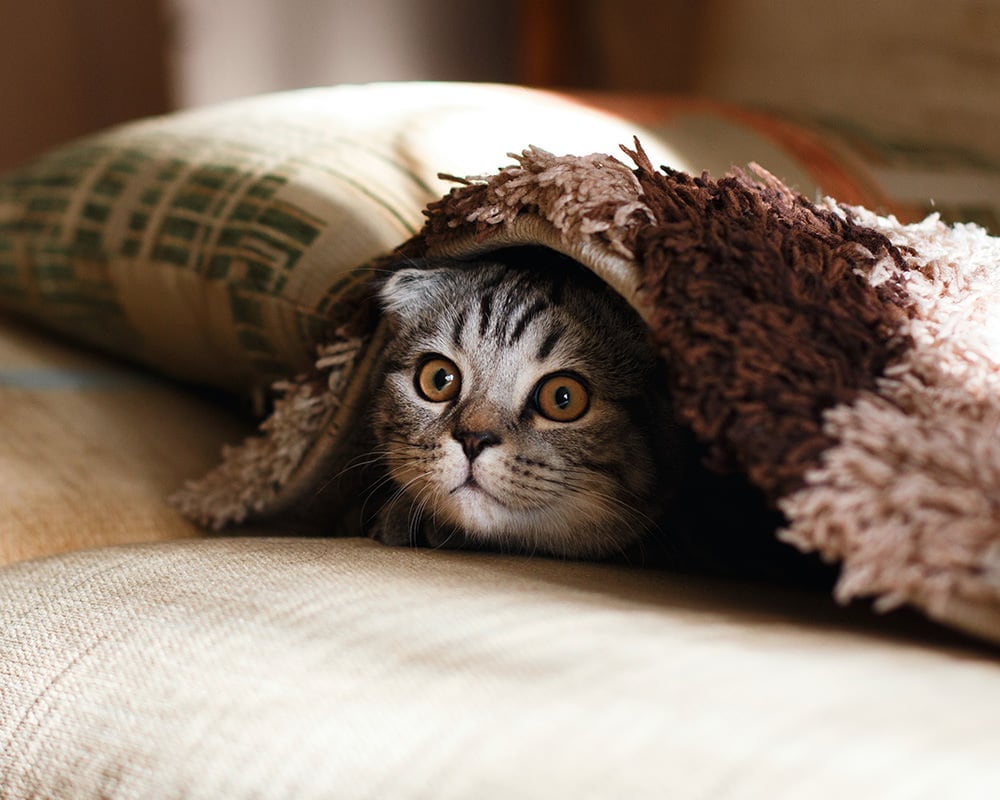
en catimini

“En catimini” is a French expression that means furtively, stealthily, on the sly or discreetly. It dates back to the second half of the 14th century.

The word “catimini” is often linked to the Greek word “katamenia” which means menstruation. The idea being that women of the era kept their menstrual status largely to themselves.

However there is another possible source which comes from the region of Picardy and its Picard language. In the Middle Ages, cats were considered hypocritical animals who used stealth and pretense to hide their attacks. The word “cate” was Picard for cat and “mini” was similar to a modern French word “minou,” which is a common name for a cat in French.

Neither of these sources can be verified 100%, so the exact origin of “en catimini” remains uncertain.

English equivalents of this French saying include “behind closed doors,” “by stealth,” “in secret,” “on the sly,” “on the down low” and “on the quiet.”

Don’t miss out on new posts – subscribe now!

Don’t miss new articles!

Get 1 email a week with new articles about French

We don’t spam! Read more in our privacy policy

Similar Posts

  • verb: se plaindre

    “Se plaindre” means “to complain,” “to whinge” or “to moan.” Conjugations in Present Tense and Passé Composé: Present tense: Passé composé tense: Etymology: The origin of “se plaindre” can be traced back to Latin, where the root “plangere” meant “to lament” or “to beat one’s chest.” Idiomatic Expressions and Usage:

  • humour vs humeur

    Both “humour” and “humeur” are French nouns. But they mean different things. “L’humour” (masculine) means “the humour” or “the comedy.” It corresponds fairly closely to the English word “humour” (or “humor,” in US English). In French culture, especially cultivated and sophisticated French culture, “wit” was seen as more important. The French idea of “wit” is…

  • tirer

    The French verb “tirer” means “to draw” or “to pull,” but it has many additional meanings. It is a widely used verb, as well as being the basis of other related verbs such as attirer, étirer, retirer and soutirer. Multiple Meanings of “Tirer”: Etymology The verb “tirer” comes from the Latin verb “tirare,” which means…

  • where

    Most French learners are familiar with the word for “where,” which is “où.” But how do you say “somewhere,” “nowhere,” “anywhere,” “everywhere,” “elsewhere,” and similar words?

  • verb: railler

    Meaning of “Railler” The verb “railler” in French carries the primary meaning of mocking, ridiculing, or making fun of someone or something. When you “railler” someone, you are essentially poking fun at them in a light-hearted or sometimes even sarcastic manner. It’s a verb that conveys a sense of playful teasing, often without malice. Etymology…

  • Beyond hier and demain

    Translating “the day before,” “tomorrow,” and “the day after” into French You may already know the French words “hier” (yesterday) and “demain” (tomorrow). French offers several expressions to convey concepts like “the day before,” “tomorrow,” and “the day after.” Each has its unique nuances depending on the context. 1. “The day before” The English phrase…