pousser

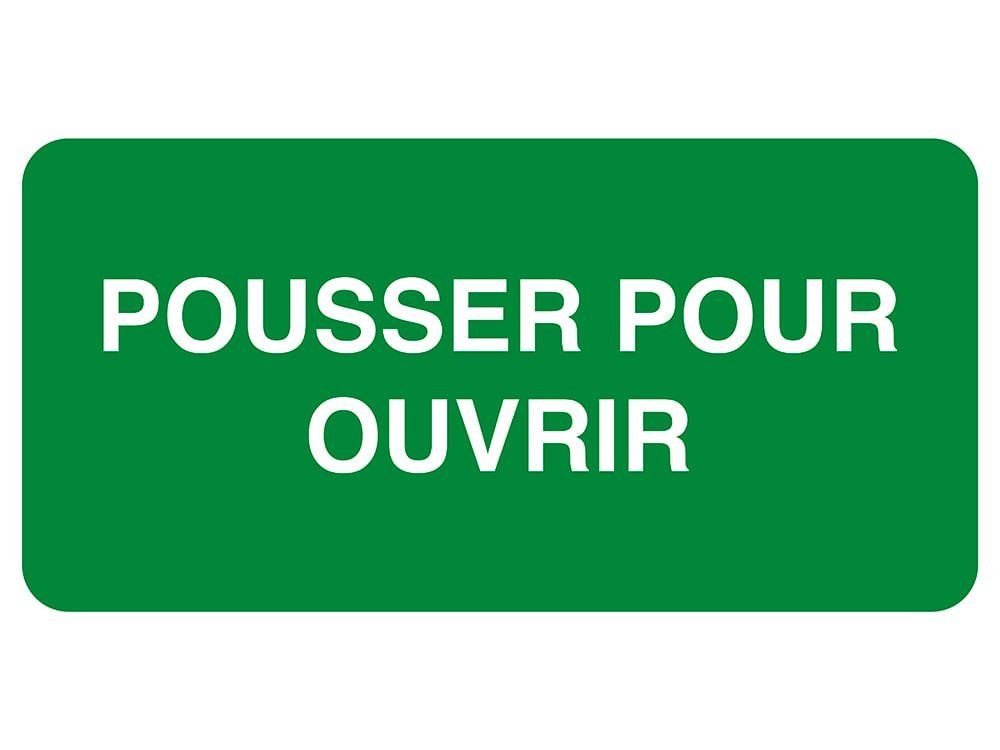
The French verb “pousser” means “to push,” “to move,” “to push aside,” “to let out,” or “to grow,” among a variety of different meanings. The green sign in the photo means “Push to open.”

To push:

“Pousser” mainly means to push or shove.

  • “Il faut pousser la porte pour entrer.” (Push the door to enter.)
  • “Elle pousse son ami à essayer quelque chose de nouveau.” (She encourages her friend to try something new.)

To grow:

  • “Les plantes poussent dans le jardin.” (Plants grow in the garden.)

Expressions and Idiomatic Usage:

  • “Pousser un cri de joie.” (Utter a cry of joy.)
  • “Il a poussé un coup de gueule contre l’injustice.” (He ranted against injustice.)

Etymology:

The French verb “pousser” traces its roots to the Latin term “pulsare,” signifying “to push.” This origin underscores the fundamental notion of exerting force for movement.

Don’t miss new articles!

Get 1 email a week with new articles about French

We don’t spam! Read more in our privacy policy

Similar Posts

  • couler

    The French verb couler has a range of meanings, from the literal “to flow” or “to sink” to the figurative “to cast,” “to pass” (time), or “to go smoothly.” Meanings and Usage of Couler Conjugation of Couler in the Present and Passé Composé Tenses Present Tense Pronoun Conjugation Je coule Tu coules Il/Elle/On coule Nous…

  • tenir la jambe

    The French saying “tenir la jambe” means literally “to hold the leg.” What it means figuratively is “to hold someone back or to delay someone by saying lots of boring or irrelevant things to them.” This conjures up images of trying to get away from someone who insists on telling you something, even though you…

  • Boire en Suisse

    “Boire en Suisse” means to drink alone, to eat alone, to do something without inviting friends or even to do something in Switzerland. Literally it means to drink in Switzerland, but “en Suisse” can either mean “in Switzerland” or “like a Swiss person.” It comes from an expression dating back to around 1800. This was…

  • maint

    The French adjective “maint” means “many,” “many a,” “numerous” or “manifold.” It is a little archaic and is most commonly used in a literary way, although some still use it in everyday speech. People tend to prefer more modern words such as “beaucoup,” “nombreux,” “plusieurs,” or more familiarly, “plein de.” As an adjective, “maint” must…

  • Paraître

    The verb “paraître” means “to appear” or “to seem” in English. It is commonly used to describe how something appears or seems to be. Conjugation in the Present Tense Examples Usage Tips

Leave a Reply

Your email address will not be published. Required fields are marked *