
chargé
The French adjective “chargé” has several meanings and can be used in various contexts. Amongst others, it can mean “loaded,” “busy,” “charged” and “heavy.” Here are some usage examples: Etymology of “charger”
The French adjective “chargé” has several meanings and can be used in various contexts. Amongst others, it can mean “loaded,” “busy,” “charged” and “heavy.” Here are some usage examples: Etymology of “charger”

In French, one of the most important verbs is “aller,” which means “to go.” Let’s look at how it works in different situations. Present Tense: In the present tense, “aller” (to go) is conjugated as follows: Example: Je vais au cinéma ce soir. (I am going to the cinema tonight.) Imperfect Tense: When describing ongoing…
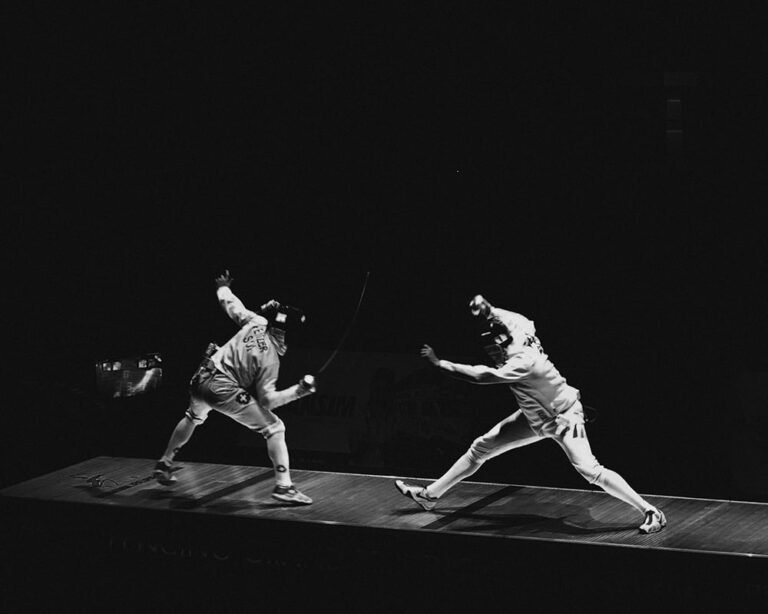
The French verb “parer” means “to ward off,” “to parry,” or “to fend off.” It can also mean “to protect,” “to attribute” or “to adorn.” So many meanings for one verb!

The French verb “exiger” means “to demand,” “to require,” or “to insist upon.” It comes from the Latin verb “exigere,” which means “to drive out” or “to demand.” Examples: Conjugation Présent j’exigetu exigesil exigenous exigeonsvous exigezils exigent Passé composé j’ai exigétu as exigéil a exigénous avons exigévous avez exigéils ont exigé

The French word “jurer” is a commonly used verb. It means “to swear,” “to swear to,” “to swear that,” “to promise,” “to affirm,” and, “to use swear words.” 1. To Swear (an Oath): One of the primary meanings of “jurer” revolves around the act of swearing an oath, committing oneself solemnly to a promise or…

The French verb “prendre” means “to take,” but a bit confusingly it can also mean “to bring.” Its conjugation in the present tense is irregular, so it must be memorised. However, “prendre” forms the basis for compound verbs such as “comprendre” (to understand), “apprendre” (to learn), “reprendre” (to take back), “surprendre” (to surprise) and many…

The French expression “tomber des nues” translates literally as “to fall from the clouds.” “Les nues” is a feminine plural noun meaning “the clouds” or “the heavens.” It is not used these days, except in a literary sense. The modern word for clouds is “les nuages” and for heavens it is “le ciel” or “le paradis.”…

There are few different ways of translating the verb “to happen” into French. You can use the French verbs “se passer,” “arriver” or “se produire.” Let’s look at some examples of each, in order of most frequent usage. se passer arriver se produire

The French verb “manquer à” means “to miss (someone)” “Manquer” is a regular “-er” verb. In fact it has several meanings, but one of its main meanings is to miss someone, in the sense of wishing that they were here. In this construction, it is used with either “à” or a indirect object pronoun. Examples…