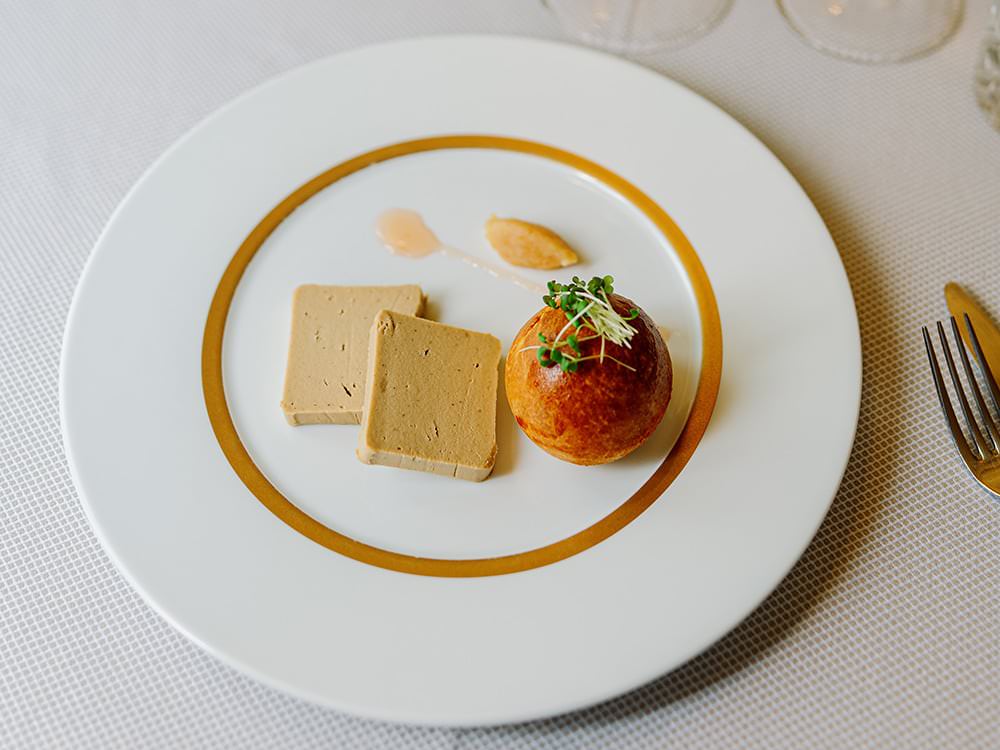
fois, foi and foie

What are the differences between the three French homonyms (words that sound the same, in this case) la fois, la foi and le foie? These three words are pronounced identically, but have quite different meanings.

La fois

La fois means “the time.” It always ends in the letter “s,” even when it is singular. Despite its appearance, ending in a consonant, it is feminine. It is used to express the number of times something is happening – once, twice, three times, four times, and so on.

  • une fois – once
  • deux fois – twice
  • cent fois – 100 times
  • la dernière fois – last time
  • la prochaine fois – next time
  • tant de fois – so many times

La foi

La foi means “the faith.” It is also a feminine noun, even though it doesn’t end in a silent “e.” It means religious faith, or faith in the sense of trust, or can even mean evidence.

  • la foi chrétienne – the Christian faith
  • avoir foi en quelqu’un – to have faith in someone
  • ma foi – upon my word
  • en bonne foi – in good faith
  • sur la foi de témoins – on the evidence of witnesses

Le foie

Le foie is a masculine noun, despite ending in a silent “e,” which would normally suggest a feminine noun. It means “the liver.”

  • foie d’agneau – lamb’s liver
  • pâté de foie gras – paté made from fatty liver, or just “foie gras.”
  • avoir mal au foie – to have an upset stomach
  • une crise de foie – indigestion
  • se ronger les foies – to worry (informal)

Don’t miss new articles!

Get 1 email a week with new articles about French

We don’t spam! Read more in our privacy policy

Similar Posts

  • conscient

    Meanings of “Conscient” Etymology of “Conscient” The word “conscient” has a Latin origin, derived from the Latin word “conscientia,” which means “knowledge” or “consciousness.” Over time, this Latin term evolved into the Old French “conscient,” maintaining its core meaning of awareness or consciousness. It is important to note that the word “conscience” in modern French…

  • être en panne

    “Être en panne” is a French saying that means to be damaged, to be broken, to be defective, to have broken down, or to have stopped an activity. This expression dates back to the 16th century, to the world of sailing ships. “Mettre en panne” meant to adjust the sails in such a way that…

  • phoque

    “Un phoque” is a French masculine noun meaning “a seal,” referring to the marine mammal. Idiomatic expressions Etymology The word “phoque” is derived from the Latin “phoca,” a feminine noun meaning “seal.” Its first surviving recorded usage in French was in 1532, when it was spelled “focque.” By 1573 its spelling had changed to “phoque”…

  • Verb: être

    The French verb “être” is important in the French language. It serves as the equivalent of the English verb “to be” and plays a vital role in constructing sentences, expressing identity, existence, and characteristics. With its diverse conjugation patterns, “être” encapsulates the essence of being in the French language. As an irregular verb, “être” defies…

  • tirer

    The French verb “tirer” means “to draw” or “to pull,” but it has many additional meanings. It is a widely used verb, as well as being the basis of other related verbs such as attirer, étirer, retirer and soutirer. Multiple Meanings of “Tirer”: Etymology The verb “tirer” comes from the Latin verb “tirare,” which means…

2 Comments

  1. NOTRE DAME de Foy is claimed to mean ” Our Lady of faith”. The French lexicon only shows “foi” s meaning “faith” How can a Church have that word “Foy”?

    1. Because “foy” is an older spelling of “foi,” just as “roy” is an older spelling of “roi” and “françois” (and “françoys”) is an older spelling of “français.”

Comments are closed.