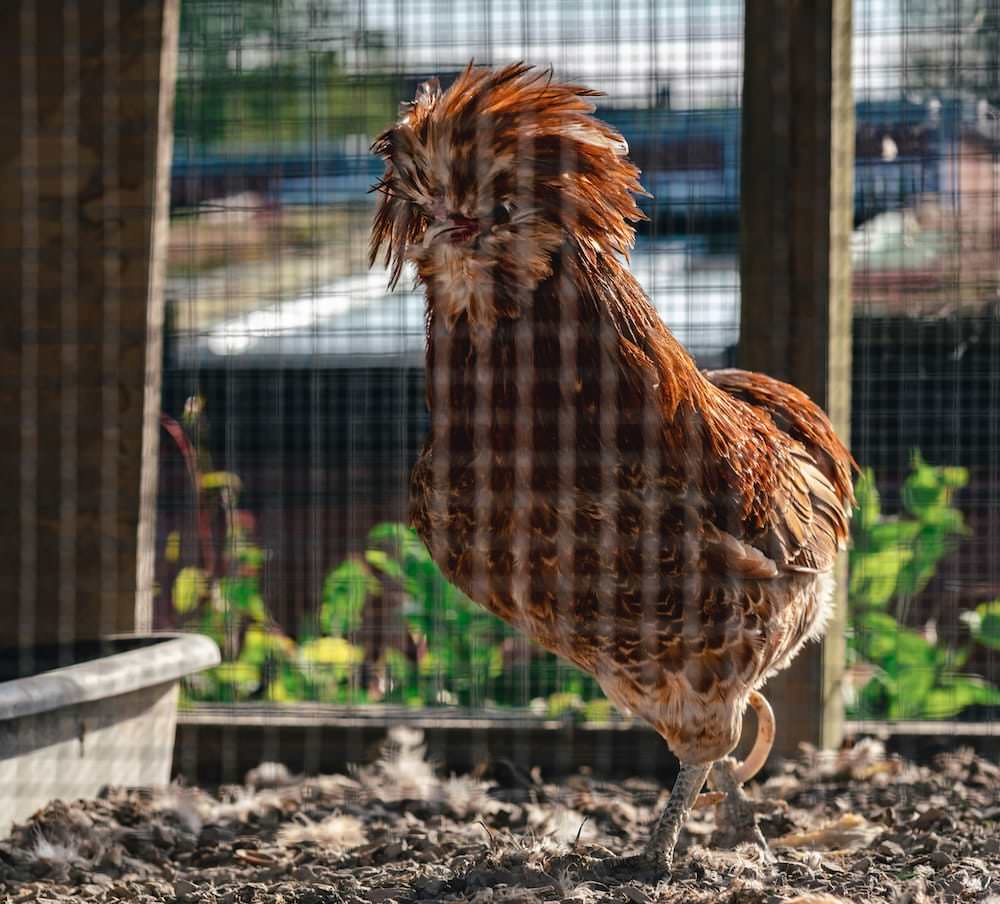
farfelu

The French adjective farfelu describes someone or something that is eccentric, whimsical, odd, or unconventional. It can convey a lighthearted, playful sense of strangeness, or sometimes imply impracticality or silliness. The feminine form is farfelue, and it can also function as a noun to describe a person with these characteristics.


Meaning and usage

Eccentric or whimsical

Farfelu often describes people, ideas, or projects that are imaginative, unusual, or out of the ordinary.

Examples:

  • Il a toujours des idées farfelues. He always has quirky ideas.
  • Ce roman est plein de personnages farfelus. This novel is full of eccentric characters.
  • Ils ont organisé une fête farfelue avec des costumes étranges. They organised a whimsical party with strange costumes.

Synonyms or alternative expressions:

  • Bizarre
  • Excentrique
  • Original
  • Insolite

Impractical or slightly absurd

Farfelu can imply that something is not only unusual but also unrealistic, impractical, or illogical.

Examples:

  • Ton projet de construire une maison dans un arbre est un peu farfelu. Your plan to build a house in a tree is a bit far-fetched.
  • Il a proposé une solution farfelue au problème. He suggested an absurd solution to the problem.
  • Nous avons ri de ses idées farfelues. We laughed at his ridiculous ideas.

Synonyms or alternatives:

  • Absurde
  • Inconcevable
  • Ridicule

As a noun

Farfelu (masculine) or farfelue (feminine) can be used as a noun to describe a person who behaves eccentrically.

Examples:

  • C’est un farfelu, mais on l’apprécie. He is an eccentric person, but we like him.
  • Il est un farfelu qui invente toujours des gadgets étranges. He is an eccentric person who always invents strange gadgets.

Common expressions

  • Idée farfelue unusual or whimsical idea.
  • Projet farfelu impractical or eccentric project.
  • Personnage farfelu quirky or eccentric character.

Summary

  • Farfelu describes eccentricity, whimsy, or impracticality.
  • Feminine form: farfelue.
  • Can function as both an adjective and a noun.
  • Synonyms include bizarre, excentrique, absurde, insolite.
  • Usage applies to people, ideas, projects, and events.

Don’t miss new articles!

Get 1 email a week with new articles about French

We don’t spam! Read more in our privacy policy

Similar Posts

  • cutting bread & cheese

    France is renowned for its rich culinary traditions, where even the simplest acts—like slicing bread or serving cheese—are governed by time-honored etiquette. Whether you’re enjoying a rustic meal or a formal dinner, knowing how to properly cut a baguette or serve cheese can make all the difference. The Sacred Baguette: Never Cut with a Knife…

  • recevoir

    The French verb “recevoir” The verb “recevoir” is an irregular third-group French verb that means “to receive” or “to get.” It is frequently used in both formal and informal contexts. Like other irregular verbs, its conjugation requires special attention, but its utility makes it an essential verb to learn. Meanings of “recevoir” Conjugation of “Recevoir”…

  • Motif

    1. Gender and Basic Definition “Motif” is a masculine noun in French, so it is always used with masculine articles and adjectives. For example: 2. Meanings of “Motif” The noun motif has several meanings in French, depending on the context. Here are the two most common ones: a. Reason or Cause In many cases, motif…

  • forcément

    The French adverb “forcément” is a versatile word that can be translated in several ways depending on context. It is based on the idea of necessity or inevitability, but it also appears in everyday speech. Etymology The word “forcément” comes from the adjective “forcé” (forced) and the adverbial suffix “-ment.” It literally means “in a…

  • verbs with à

    In French, certain verbs are always followed by the preposition à before introducing another verb or noun. This construction can be tricky for learners, as the preposition changes the meaning or usage of the verb. 1. Aider à (to help to) 2. S’amuser à (to have fun doing) 3. Apprendre à (to learn to) 4….

  • acronyms

    French uses acronyms extensively in formal writing, news media, and digital communication. An acronym is a word formed from the initial letters of a phrase, like NATO or NASA. Understanding them is essential for reading French texts and following informal online exchanges. Informal and online acronyms These acronyms are used in texting, on social media,…