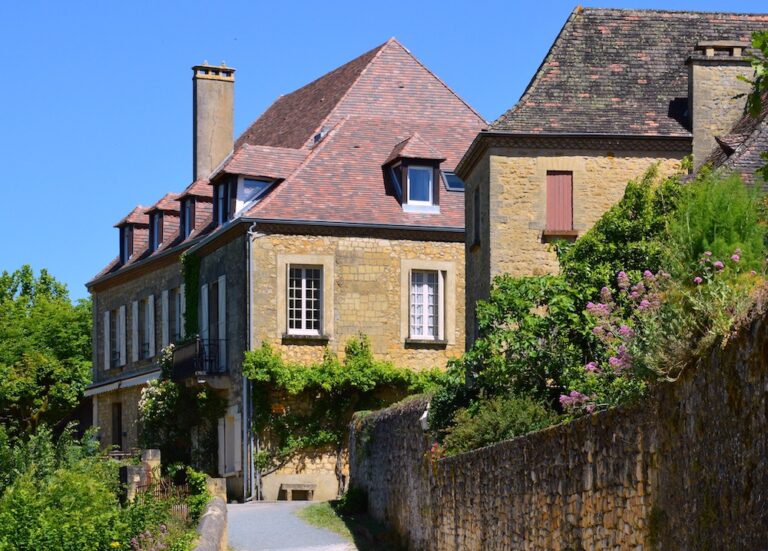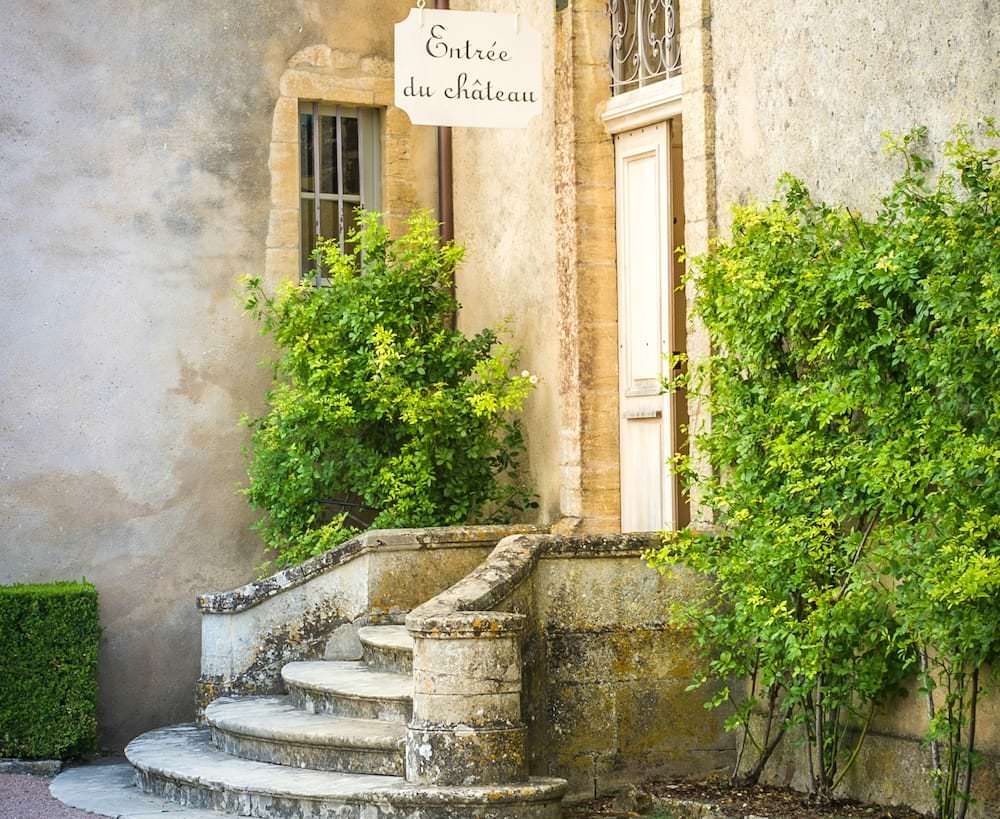
inside outside
To refer to being inside or outside of things in French, we use words like dans, hors, dedans, dehors, à l’intérieur, and à l’extérieur, along with related terms like là-dedans and là-dehors.
1. Dans
Meaning:
- Dans means “in” or “inside” and is used as a preposition to indicate location within a space.
Usage:
- It is generally followed by a noun and does not stand alone.
- It emphasizes being enclosed or surrounded by something.
Examples:
- Je suis dans la maison. – “I am in the house.”
- Il y a un cadeau dans la boîte. – “There is a gift in the box.”
- Dans trois jours, je partirai en voyage. – “In three days, I will go on a trip.” (Temporal use)
Etymology:
- Dans comes from Old French dentre (from Latin de intro), meaning “from within.”
- It gradually evolved to simply mean “in” or “inside.”
2. Hors
Meaning:
- Hors means “outside” or “out of” and is used as a preposition.
- It indicates being beyond or outside a boundary or limit.
Usage:
- Often used with de (hors de) when followed by a noun.
- It emphasizes exclusion or being outside of something.
Examples:
- Il est hors de la maison. – “He is outside the house.”
- Hors service. – “Out of order.”
- Hors de question ! – “Out of the question!” (Figurative use)
Etymology:
- Hors comes from Latin foris, meaning “outside” or “abroad.”
- The sense of exclusion or being outside has been preserved over time.
3. Dedans
Meaning:
- Dedans means “inside” and is an adverb.
- It indicates being within an enclosed space.
Usage:
- Can stand alone or follow a verb.
- Often used when the object or space is already known or implied.
Examples:
- Il est dedans. – “He is inside.”
- Mets-le dedans. – “Put it inside.”
- Elle regarde dedans. – “She is looking inside.”
Là-dedans
- Là-dedans combines là (“there”) with dedans, meaning “in there” or “inside there.”
- It emphasizes a specific place previously mentioned or understood from context.
Examples:
- Qu’est-ce qu’il y a là-dedans ? – “What’s in there?”
- Ne va pas là-dedans, c’est dangereux. – “Don’t go in there; it’s dangerous.”
- Il a mis ses clés là-dedans. – “He put his keys in there.”
Etymology:
- Dedans comes from Old French de + dans, meaning “from within.”
- Là-dedans literally means “there inside.”
4. Dehors
Meaning:
- Dehors means “outside” and is an adverb.
- It indicates being outside an enclosed space.
Usage:
- Can stand alone or follow a verb.
- Often used when the outside area is understood from context.
Examples:
- Il est dehors. – “He is outside.”
- Jouer dehors. – “To play outside.”
- On va manger dehors ce soir. – “We’re going to eat out tonight.”
Là-dehors
- Là-dehors combines là (“there”) with dehors, meaning “out there” or “outside there.”
- It emphasizes a specific outside location previously mentioned or implied.
Examples:
- Qu’est-ce qu’il fait là-dehors ? – “What is he doing out there?”
- Il fait froid là-dehors. – “It’s cold out there.”
- Ils attendent là-dehors depuis une heure. – “They’ve been waiting out there for an hour.”
Etymology:
- Dehors is formed from de + hors, literally “from outside.”
- Là-dehors means “there outside.”
5. À l’intérieur
Meaning:
- À l’intérieur means “inside” or “on the inside.”
- It is more formal or specific than dedans and emphasizes the interior aspect of something.
Usage:
- Often used to specify being inside a defined space or object.
- It is followed by de when linked to a noun.
Examples:
- Il est à l’intérieur de la maison. – “He is inside the house.”
- Regarde à l’intérieur de la boîte. – “Look inside the box.”
- À l’intérieur, il fait chaud. – “Inside, it’s warm.”
Etymology:
- Intérieur comes from Latin interior, meaning “inner” or “internal.”
- It emphasizes the inner part or space.
6. À l’extérieur
Meaning:
- À l’extérieur means “outside” or “on the outside.”
- It emphasizes the exterior or outer part of a space or object.
Usage:
- Used to specify being outside a defined space or object.
- Often followed by de when linked to a noun.
Examples:
- Il est à l’extérieur de la maison. – “He is outside the house.”
- À l’extérieur, il fait froid. – “Outside, it’s cold.”
- Les décorations sont à l’extérieur du bâtiment. – “The decorations are outside the building.”
Etymology:
- Extérieur comes from Latin exterior, meaning “outer” or “external.”
- It contrasts with intérieur to specify the outer part or space.
Summary of Differences
| Word | Type | Meaning | Usage Example |
|---|---|---|---|
| Dans | Preposition | In, inside | Je suis dans la voiture. |
| Hors | Preposition | Outside, out of | Hors de portée. |
| Dedans | Adverb | Inside | Il est dedans. |
| Là-dedans | Adverb | In there, inside there | Qu’est-ce qu’il y a là-dedans ? |
| Dehors | Adverb | Outside | Il est dehors. |
| Là-dehors | Adverb | Out there, outside there | Qu’est-ce qu’il fait là-dehors ? |
| À l’intérieur | Phrase | Inside, on the inside | À l’intérieur de la boîte. |
| À l’extérieur | Phrase | Outside, on the outside | À l’extérieur du bâtiment. |
By understanding the nuances of these words, you’ll not only speak more precisely but also appreciate the linguistic richness of French. Want to learn more? Explore other articles on our site!