verb: flâner

Meanings

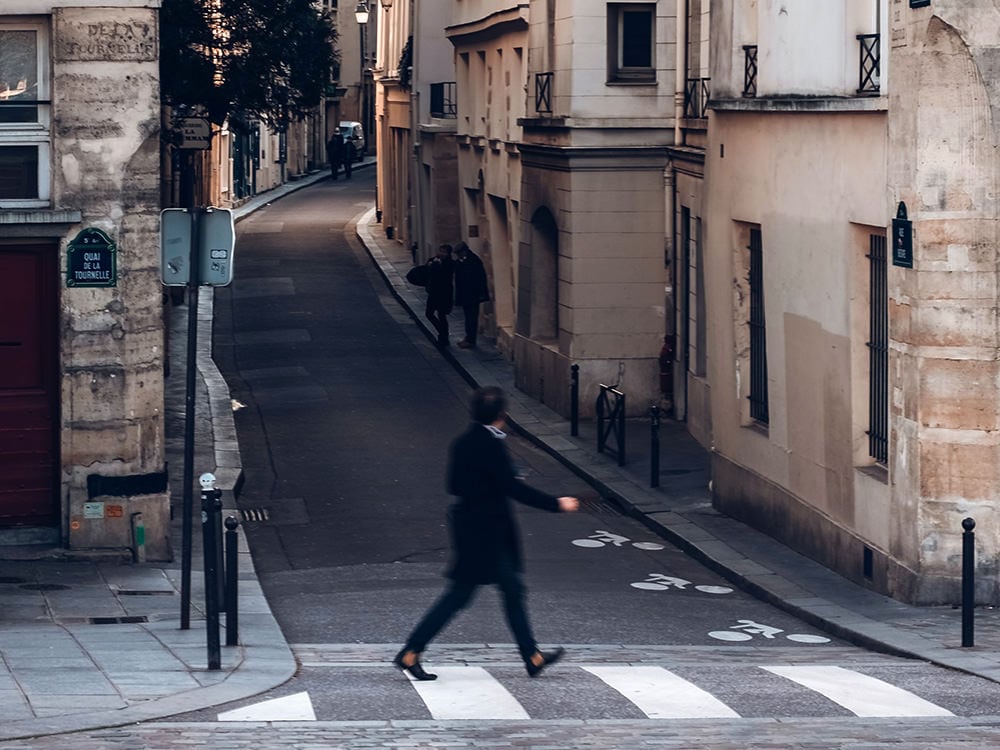
1. Strolling with Purpose: At its core, “flâner” means to stroll or wander aimlessly, usually in urban environments. However, this wandering is far from mindless. It involves observing and absorbing the surroundings, often with a sense of curiosity and openness. It’s a gentle meandering that allows one to connect with the city’s rhythm, architecture, and people.

2. Cultivating Boredom: Flâner goes beyond mere observation; it embraces the notion of being comfortably bored. It’s about allowing oneself to slow down and detach from the frantic pace of modern life, inviting a deeper connection with the world around.

3. Philosophical Contemplation: This leisurely wandering also has philosophical undertones. Thinkers like Charles Baudelaire and Walter Benjamin associated flânerie with the act of engaging in profound thought and reflection while wandering through city streets.

4. Embracing Serendipity: Flâner is also about embracing the unexpected. It involves surrendering to chance encounters, stumbling upon hidden gems, and letting the city reveal its secrets in its own time.

Conjugating “Flâner” in Present Tense and Passé Composé

Present Tense:

  • Je flâne (I stroll)
  • Tu flânes (You stroll)
  • Il/elle flâne (He/she strolls)
  • Nous flânons (We stroll)
  • Vous flânez (You all stroll)
  • Ils/elles flânent (They stroll)

Passé Composé:

The passé composé is formed with the auxiliary verb “avoir” and the past participle “flâné.”

  • J’ai flâné (I strolled)
  • Tu as flâné (You strolled)
  • Il/elle a flâné (He/she strolled)
  • Nous avons flâné (We strolled)
  • Vous avez flâné (You all strolled)
  • Ils/elles ont flâné (They strolled)

Etymology

The verb “flâner” dates back to the 16th century. It comes from the Old Norse word “flana,” meaning “to wander about.” This term later evolved into the Middle French “flâner,” with the sense of casual wandering that we recognize today.

Idiomatic Expressions that use “Flâner”

1. Flâner en amoureux: To stroll as lovers.

2. Flâner en solo: To wander alone.

3. Flâner dans les rues: To wander the streets.

4. Flâner au hasard: To wander at random.

5. Flânerie intellectuelle: Intellectual wandering.

Don’t miss new articles!

Get 1 email a week with new articles about French

We don’t spam! Read more in our privacy policy

Similar Posts

  • aller à la selle

    The French idiom “aller à la selle” means literally “to go to the saddle.” But it doesn’t really have anything to do with horse riding. What it literally means is “to go to the toilet,” or “to have a bowel movement.” The saying is somewhat dated, so it is not used very frequently these days,…

  • obligation

    French expresses obligation through several common structures. The most frequent tools are devoir, falloir, être obligé de, and impersonal expressions built with être nécessaire de or similar forms. Each conveys the idea that an action is required, but they differ in whether the subject is personal, impersonal, or formal. Devoir Devoir is the most common…

  • Subjunctive regular verbs

    The subjunctive mood in French can seem difficult at first, but forming it for regular verbs is quite simple. Once you understand the basic method, it becomes much easier to use. The subjunctive is formed by taking the third-person plural form (ils/elles) of the present indicative tense, removing the -ent ending, and adding the subjunctive…

  • Auxiliary verbs

    French auxiliary verbs, also known as helper verbs, are used alongside main verbs to express tense, mood, or voice. Some of the most common auxiliary verbs in French include aller, vouloir, devoir, savoir, and pouvoir. These verbs modify the meaning of the main verb and are essential for constructing various grammatical structures. Aller (To Go)…

  • fuir vs s’enfuir

    The verbs fuir and s’enfuir both mean “to flee” or “to run away,” but they differ in grammatical structure, transitivity, and meaning. Fuir focuses on what is being fled from, while s’enfuir focuses on the act of escaping itself. Fuir Fuir is a transitive or intransitive verb. It is used when the emphasis is on…

  • g pronunciation

    The letter “g” can be pronounced in two different ways in French. It can be hard, like the first “g” in the word “garage,” which is both a French word and an English word. Or it can be soft, like the last “g” in “garage.” How do you know whether a “g” will be hard…