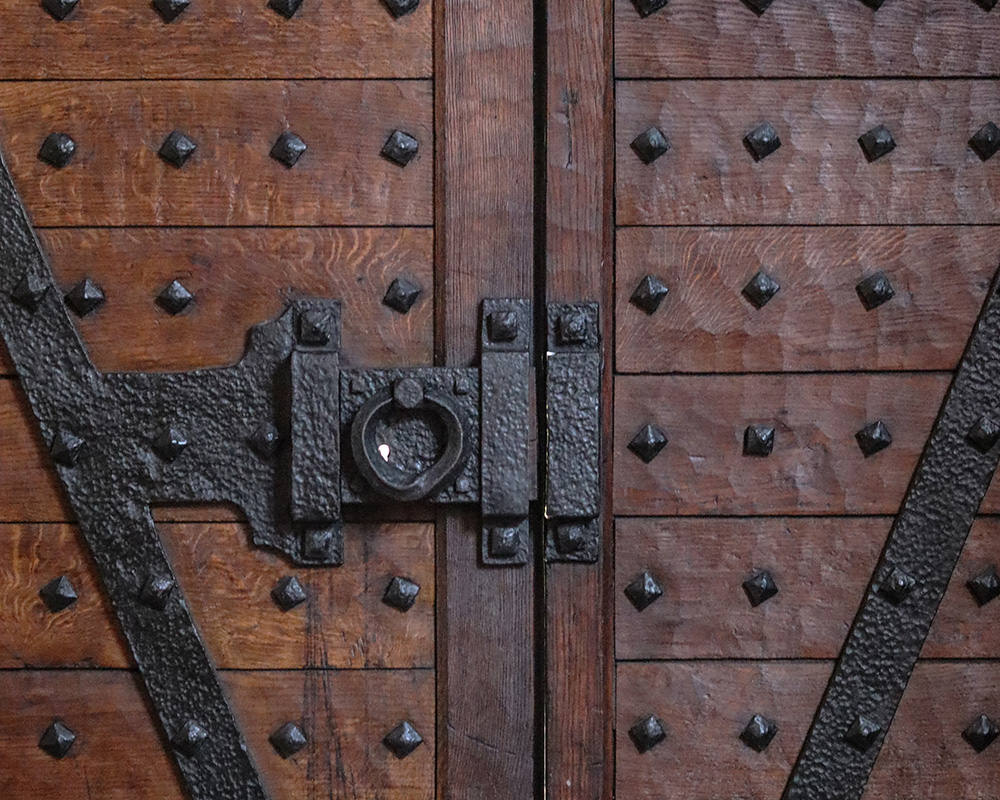
à huis clos

“à huis clos” is a French saying that means in private, with all doors closed, in secret.

It is an expression dating from the middle of the 16th century, meaning “with doors closed.” “Huis” is an old 11th century word for door, now replaced by the word “porte.” The original word for door was “us,” and it came from the low Latin word “ustium.” “Us” eventually became “huis.”

And “clos” (from the verb “clore” to close) is an old word that means “closed” and is now replaced by the contemporary word “fermée.” So the modern French equivalent of “à huis clos” would be “à portes fermées.”

English equivalents of this idiom would include “behind closed doors,” “in secret,” “in private,” “in camera,” or “in closed session.”


Don’t miss out on new posts – subscribe now!

Don’t miss new articles!

Get 1 email a week with new articles about French

We don’t spam! Read more in our privacy policy

Similar Posts

  • appel du pied

    An “appel du pied” literally means a “call of the foot” but actually means a discrete invitation, a seduction attempt, an allusive proposal or simply an invitation. Its origin is unknown. There is a related term that exists in the world of fencing with swords, but it doesn’t seem to be linked to this usage….

  • Grammar: Possessive Adjectives

    French possessive adjectives are used to describe to whom something or someone belongs. Their English equivalents are words like “my,” “your,” “his,” “her,” “its,” “our,” and “their.” They replace articles They are used instead of an article. Articles are words like “un,” “une,” “le,” “la,” “l’” (l + apostrophe), “de,” “du,” “de la,” “de l’” (de…

  • aller à la selle

    The French idiom “aller à la selle” means literally “to go to the saddle.” But it doesn’t really have anything to do with horse riding. What it literally means is “to go to the toilet,” or “to have a bowel movement.” The saying is somewhat dated, so it is not used very frequently these days,…

  • Verb: réussir

    The French verb “réussir” means “to succeed,” but it can also mean “to achieve,” “to carry off (something) successfully,” “to win,” or “to pass (an exam).” Etymology: The word “réussir” was borrowed in the early 16th century from the Italian verb “riuscire,” meaning “to re-issue” or “to go out again.” The Italian “riuscire,” is made up…

  • Boire en Suisse

    “Boire en Suisse” means to drink alone, to eat alone, to do something without inviting friends or even to do something in Switzerland. Literally it means to drink in Switzerland, but “en Suisse” can either mean “in Switzerland” or “like a Swiss person.” It comes from an expression dating back to around 1800. This was…