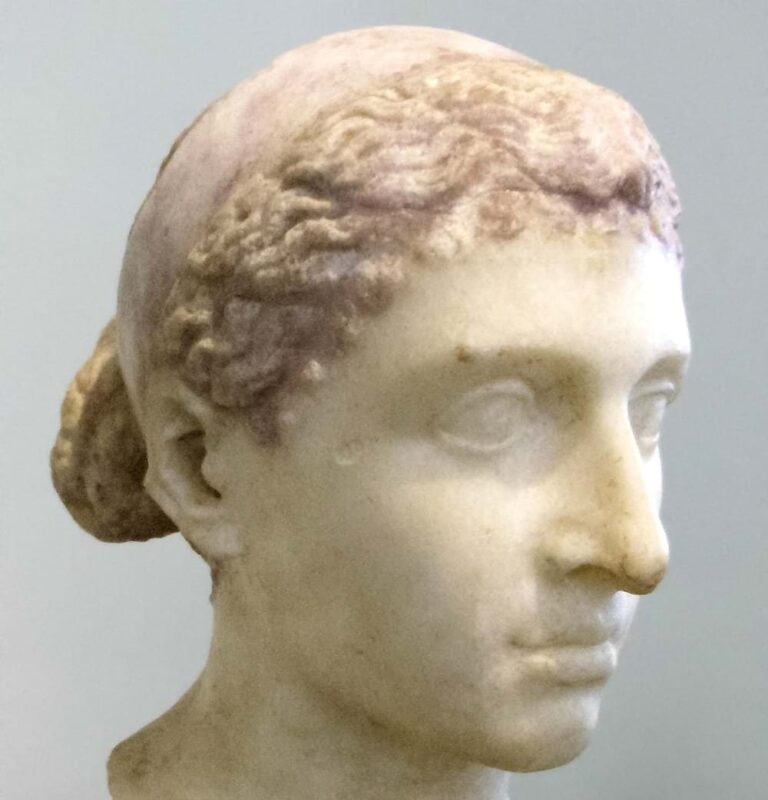
gagner ses éperons

“gagner ses éperons” is a French saying meaning “to gain one’s spurs.” It means to get a promotion, to rise in rank, or to accede to a higher social status. Similar English expressions include “to earn one’s stripes” or “to win one’s spurs.” The French idiom only appeared in the 19th century, but makes a reference to the Middle Ages, to the process by which a man became a knight. This usually occurred after some kind of daring action or bravery that earned him a knighthood. He was given weapons and a pair of spurs, symbolising his new, higher rank.

A corresponding saying from the same period is “couper les éperons” (to cut the spurs), meaning to lose one’s rank due to disloyalty or other serious offenses.

Don’t miss out on new posts – subscribe now!

Don’t miss new articles!

Get 1 email a week with new articles about French

We don’t spam! Read more in our privacy policy

Similar Posts

  • les chiens aboient et la caravane passe

    The French saying “les chiens aboient et la caravane passe” translates literally as “the dogs bark and the caravan passes.” What it really means is “your insults don’t reach me,” or “I am sure of myself and you cannot prove otherwise.” The saying is originally of Arabic origin. In the Middle East and in North…

  • verb: dessiner

    Meaning The primary meaning of the French verb “dessiner” is “to draw,” “to design,” “to map out,” “to outline,” “to depict” or even “to portray.” For example, “Il a su dessiner un tableau vivant de la scène.” Conjugation “Dessiner” is a regular “-er” verb, meaning it follows the typical conjugation patterns for this type of…

  • faire long feu

    The French idiom “faire long feu” literally translates as “to make long fire.” What it really means is “to drag on,” “to not have the desired effect,” “to last longer than expected” or “to miss your goal.” It comes from the era of of muzzle-loading rifles, before the invention of waterproof cartridges that enclosed the…

  • maint

    The French adjective “maint” means “many,” “many a,” “numerous” or “manifold.” It is a little archaic and is most commonly used in a literary way, although some still use it in everyday speech. People tend to prefer more modern words such as “beaucoup,” “nombreux,” “plusieurs,” or more familiarly, “plein de.” As an adjective, “maint” must…