-ty becomes -té
Many French nouns ending in -té match English nouns ending in -ty. Both often come from the same Latin source. The French form usually kept -té, while English often changed it into -ty. Because of this shared history, many pairs look and sound alike and have close meanings.
Examples include:
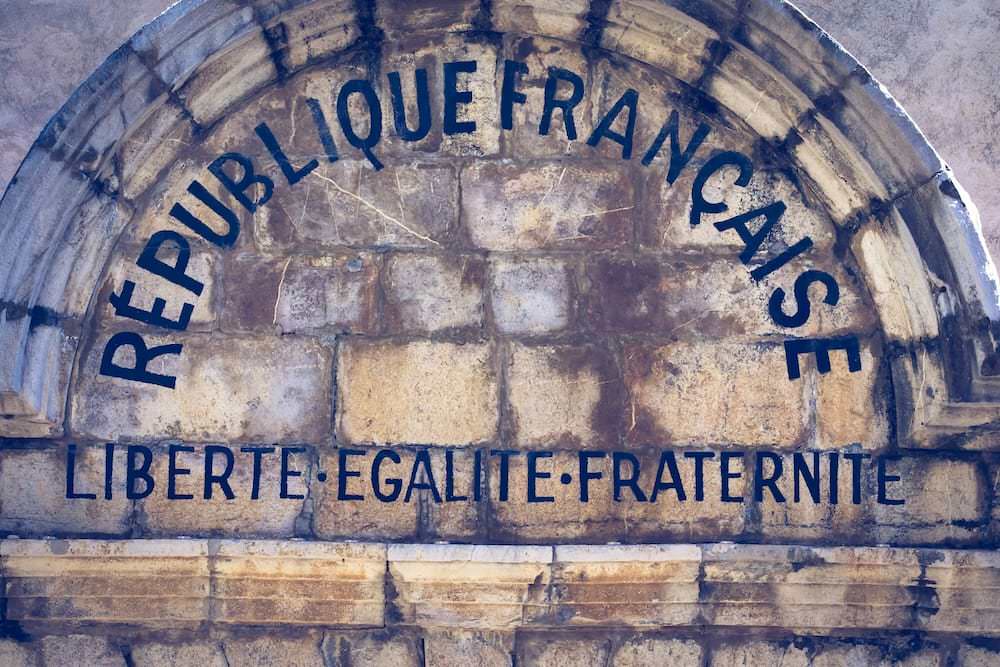
- liberté → liberty
- égalité → equality
- activité → activity
- possibilité → possibility
- responsabilité → responsibility
- curiosité → curiosity
This pattern is very common in French. Learning it can help English speakers guess the meaning of many French words.
The basic pattern
Many words follow a simple shape:
Adjective + -té in French
Adjective + -ty in English
For example:
- actif → activité
active → activity - curieux → curiosité
curious → curiosity - égal → égalité
equal → equality - responsable → responsabilité
responsible → responsibility
The noun often names a state, trait, quality, or condition.
For example:
- La liberté est importante. “Liberty is important.”
- L’égalité des chances est essentielle. “Equality of opportunity is essential.”
- Sa curiosité est sans limite. “His curiosity is without limit.”
- Cette activité prend beaucoup de temps. “This activity takes a lot of time.”
Common French -té words and their English matches
Words for qualities and traits
| French | English |
|---|---|
| liberté | liberty |
| égalité | equality |
| fraternité | fraternity |
| curiosité | curiosity |
| générosité | generosity |
| sensibilité | sensitivity |
| responsabilité | responsibility |
| honnêteté | honesty |
| stabilité | stability |
| fidélité | fidelity |
| simplicité | simplicity |
| capacité | capacity |
Examples:
- Sa générosité touche tout le monde. “His generosity touches everyone.”
- La stabilité du système est importante. “The stability of the system is important.”
- Sa fidélité est remarquable. “Her loyalty is remarkable.”
- Cette machine a une grande capacité. “This machine has a large capacity.”
Words for states and conditions
| French | English |
|---|---|
| possibilité | possibility |
| nécessité | necessity |
| sécurité | security |
| difficulté | difficulty |
| facilité | facility or ease |
| complexité | complexity |
| disponibilité | availability |
| visibilité | visibility |
Examples:
- Il existe une possibilité de retard. “There is a possibility of delay.”
- La sécurité est une priorité. “Security is a priority.”
- La difficulté du travail l’inquiète. “The difficulty of the work worries him.”
- La visibilité est mauvaise aujourd’hui. “Visibility is poor today.”
Words linked with action or process
| French | English |
|---|---|
| activité | activity |
| créativité | creativity |
| productivité | productivity |
| connectivité | connectivity |
| adaptabilité | adaptability |
Examples:
- Cette activité attire beaucoup de jeunes. “This activity attracts many young people.”
- La créativité joue un grand rôle ici. “Creativity plays a large role here.”
- La productivité a augmenté. “Productivity has increased.”
Not every -té word becomes -ty in English
Many do, but not all.
French and English often changed in different ways over time.
For example:
| French | English |
|---|---|
| beauté | beauty |
| bonté | goodness |
| vérité | truth |
| amitié | friendship |
| charité | charity |
| volonté | will |
English does not always keep the -ty ending.
Examples:
- Sa beauté frappe tout le monde. “Her beauty strikes everyone.”
- La vérité finit toujours par sortir. “The truth always comes out in the end.”
- Notre amitié dure depuis vingt ans. “Our friendship has lasted for twenty years.”
French spelling patterns to watch for
-ité is very common
A large number of French words use -ité, especially when English has -ity.
Examples:
| French | English |
|---|---|
| activité | activity |
| curiosité | curiosity |
| responsabilité | responsibility |
| université | university |
| communauté | community |
| personnalité | personality |
Examples:
- L’université ouvre ses portes lundi. “The university opens its doors on Monday.”
- Sa personnalité est très forte. “His personality is very strong.”
Accent marks matter
French usually writes an accent on é:
- liberté
- activité
- qualité
- possibilité
English drops the accent:
- liberty
- activity
- quality
- possibility
Cases where the meanings do not fully match
Words that look alike can drift apart over time.
For example:
- facilité can mean facility in some cases, but often means ease.
Examples:
- Il apprend le Français avec facilité. “He learns French with ease.”
- Cette ville possède une nouvelle installation sportive. “This city has a new sports facility.”
- actualité does not mean actuality in everyday French. It usually means current events or news.
Examples:
- Je regarde les actualités chaque soir. “I watch the news every evening.”
- Cette question est toujours d’actualité. “This issue is still current.”
Words often met by learners
These words appear very often in daily French:
- qualité
- possibilité
- activité
- responsabilité
- sécurité
- difficulté
- communauté
- université
- personnalité
- stabilité
Examples:
- La qualité du produit est excellente. “The quality of the product is excellent.”
- J’ai des difficultés avec ce logiciel. “I have difficulties with this software.”
- La communauté locale organise un festival. “The local community is organising a festival.”
Summary
- French -té and English -ty often come from the same Latin source.
- Many French nouns ending in -té have close English matches ending in -ty.
- French often uses -ité where English uses -ity.
- These nouns often name qualities, states, traits, or conditions.
- Not every French -té word becomes -ty in English.
- Some words that look alike have moved apart in meaning over time.