place

There are many different ways to translate the English word “place” into French. Here are some words that can be used to mean “place” in French, along with examples of how to use them.

un endroit – a place, a spot

  • au bon endroit – in the right place
  • un endroit calme – a quiet place
  • à quel endroit ? – where?

un lieu – a place

  • un lieu de rendez-vous – a meeting place
  • un lieu de culte – a place of worship
  • mettre quelque chose au lieu sûr – to put something in a safe place

une place – room, a space, a seat

  • avoir de la place – to have room/space (for something)
  • il reste une place en première – there is one seat left in first class
  • j’ai eu une place gratuite – I got a free seat
  • garde-moi ma place – keep my place for me (in a queue)
  • payer sa place – to pay for one’s ticket (cinema, theatre)

NOTE

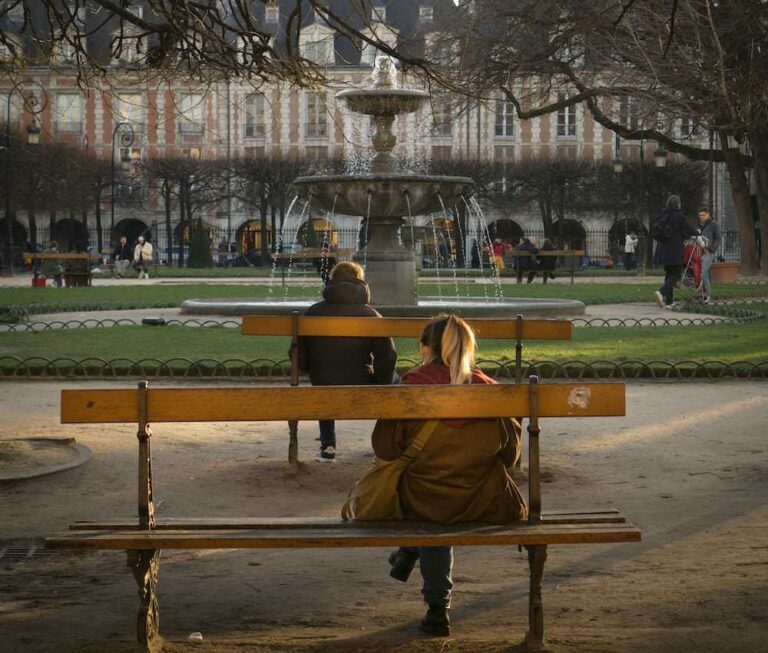
The French noun “une place” does NOT usually mean a place. It means a public square, as in Place de la Concorde, or Place Vendôme, or Place des Vosges, in Paris.

un emplacement – a site, a position, a place

  • l’emplacement d’un futur centre commercial – the site of a future shopping centre
  • ces bornes marquent l’emplacement d’un temple romain dédié à Esculape – these markers mark the place formerly occupied by a Roman temple dedicated to Aesculapius.

un local – a place

  • ils ont un local pour répéter – they have a place where they can rehearse
  • les scouts ont besoin d’un local – the scouts need a place to meet
Don’t miss new articles!

Get 1 email a week with new articles about French

We don’t spam! Read more in our privacy policy

Similar Posts

  • cerveau vs cervelle

    The French nouns cerveau and cervelle both refer, fundamentally, to the brain. However, they are not interchangeable. Their usage varies depending on context, register, and the speaker’s intent. 1. Definition and Use of “cerveau” Le cerveau (masculine noun) is the standard, anatomical term for the brain. It refers to the organ as a whole, in…

  • phoque

    “Un phoque” is a French masculine noun meaning “a seal,” referring to the marine mammal. Idiomatic expressions Etymology The word “phoque” is derived from the Latin “phoca,” a feminine noun meaning “seal.” Its first surviving recorded usage in French was in 1532, when it was spelled “focque.” By 1573 its spelling had changed to “phoque”…

  • weather

    Weather is a common topic in daily conversation, and French offers a wide range of vocabulary and expressions to talk about it. Some use the phrase il fait, while others use verbs such as pleuvoir (to rain), neiger (to snow), or geler (to freeze). Many weather expressions are impersonal, using il as the subject. Basic…

  • chargé

    The French adjective “chargé” has several meanings and can be used in various contexts. Amongst others, it can mean “loaded,” “busy,” “charged” and “heavy.” Here are some usage examples: Etymology of “charger”

  • | |

    derrière

    The French word “derrière” can function either as a preposition, as an adverb or as a noun. Depending on which one of these three parts of speech it is being used as, it can mean “behind,” “after,” “shortly after,” “afterwards,” “bottom,” or “back.” It is the opposite of “devant,” discussed in this blog post. Preposition…

  • Irregular verbs update

    The article with the list of important irregular verbs in French has just been updated. New information has been added. Errors have been corrected. If you haven’t already read it, it’s worth checking out. I suggest you memorise at least the first nine (9) verbs on the list. These are être, avoir, faire, aller, venir,…

Leave a Reply

Your email address will not be published. Required fields are marked *