jeter vs jetée: are they related?
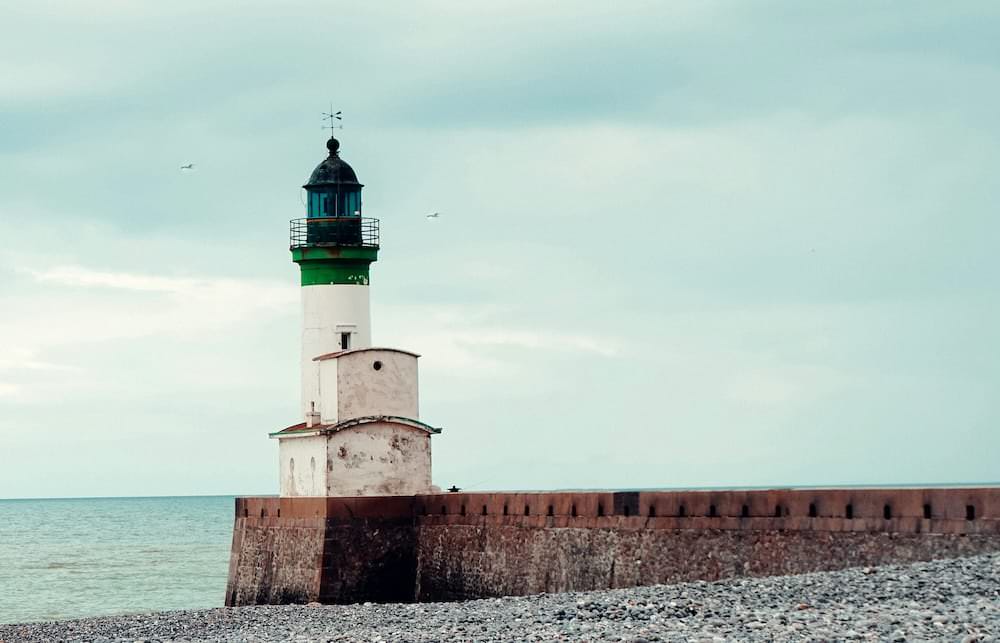
The French verb jeter means “to throw”, “to cast”, “to toss”, or at times “to put” or “to send”. The noun une jetée has more than one use, but today it most often means a pier, breakwater, or long built structure that projects into water. The two words are related. Jetée comes from the same word family as jeter, and the link between them becomes easier to see once one looks at their older meanings.
The root behind both words
Both words go back to Latin iactare, which meant “to throw often”, “to toss about”, or “to hurl”. Through changes over time, Old French developed forms such as jeter.
The basic idea behind the word family was motion through throwing or casting.
From jeter came many French nouns:
- jet = throw, burst, stream, spray
- rejet = rejection, waste, throwback
- trajet = route, course, journey
- projet = plan, project
- jeton = token
- jetée = thing thrown or cast
The ending -ée often turns a verb into a noun that names the result of an act or the thing produced by it.
Examples:
- Une poignée from poigner “a handful”
- Une montée from monter “a climb” or “an ascent”
- Une arrivée from arriver “an arrival”
So jetée first meant something like “that which has been thrown” or “that which has been cast out”.
How a “thrown thing” became a pier
The modern meaning of jetée as a pier or breakwater came from building methods.
To make a barrier in water, workers once dumped or threw large amounts of stone, earth, timber, and other material into the sea or river. This mass of thrown material formed a structure that pushed out into the water.
So the chain of meaning was roughly:
- throw
- thrown material
- built mass of thrown material
- pier or breakwater
English had a similar path in some old building terms. Many building words began as descriptions of actions.
The old sense of jetée as “thing thrown” faded, while the harbour meaning stayed alive.
Examples:
- Le bateau est amarré près de la jetée. “The boat is tied near the pier.”
- Nous avons marché jusqu’à la jetée. “We walked to the pier.”
- Les vagues frappaient la jetée. “The waves struck the breakwater.”
- La jetée protège le port. “The breakwater protects the harbour.”
The direct use of jeter
The verb itself still keeps its old core sense of throwing.
Examples:
- Il a jeté la balle. “He threw the ball.”
- Elle a jeté les clés sur la table. “She threw the keys onto the table.”
- Ne jetez pas ces papiers. “Do not throw away those papers.”
- Ils ont jeté des pierres dans la rivière. “They threw stones into the river.”
French also uses jeter in many less direct ways.
Examples:
- Jeter un regard “To cast a glance”
- Jeter un coup d’œil “To take a quick look”
- Jeter le doute “To cast doubt”
- Jeter les bases “To lay the foundations”
- Jeter l’argent par les fenêtres “To throw money away”
The old idea of throwing or sending outward still lies under these uses.
Other meanings of jetée
Besides the harbour sense, jetée has had other uses.
In dance, especially ballet, a jeté is a leap in which the dancer seems to throw the body through space.
There was also an older use of jetée in building and military works for something projecting outward.
The sense of projection remains the common thread.
Related words in the same family
Many French words from this family no longer make the idea of throwing obvious.
Jet
Examples:
- Un jet d’eau “A water jet”
- Un jet de vapeur “A burst of steam”
- Le jet de lumière traversait la pièce. “The beam of light crossed the room.”
Originally this was the act or result of throwing.
Projet
Today projet means “project” or “plan”, but Latin proicere meant “to throw forward”.
Examples:
- Son projet a été accepté. “His project was accepted.”
- Nous travaillons sur un nouveau projet. “We are working on a new project.”
Trajet
Trajet comes from the idea of throwing across.
Examples:
- Le trajet dure une heure. “The journey lasts one hour.”
- Le trajet était très long. “The trip was very long.”
Rejet
Examples:
- Le rejet de sa demande l’a surpris. “The rejection of his request surprised him.”
- L’usine réduit ses rejets dans la rivière. “The factory is reducing its discharge into the river.”
Synonyms and related words
For jeter:
- lancer = to throw, launch
- balancer = to toss
- envoyer = to send
- rejeter = to throw back, reject
- se débarrasser de = to get rid of
Examples:
- Il a lancé la balle. “He threw the ball.”
- Elle veut se débarrasser de ces vieux livres. “She wants to get rid of these old books.”
For jetée in the harbour sense:
- quai = quay, dock
- môle = pier, breakwater
- digue = sea wall, dyke
These are not exact matches.
A quai is often where ships load and unload.
A digue mainly holds back water.
A jetée often projects outward into the sea or harbour.
Summary
- Jeter and jetée belong to the same word family.
- Both go back to the idea of throwing or casting.
- Jetée first meant something thrown or cast.
- The modern harbour meaning grew from old building methods in which material was thrown into water to build a projecting structure.
- Many French words such as jet, projet, trajet, and rejet still carry traces of this old idea of movement through throwing.