homeless
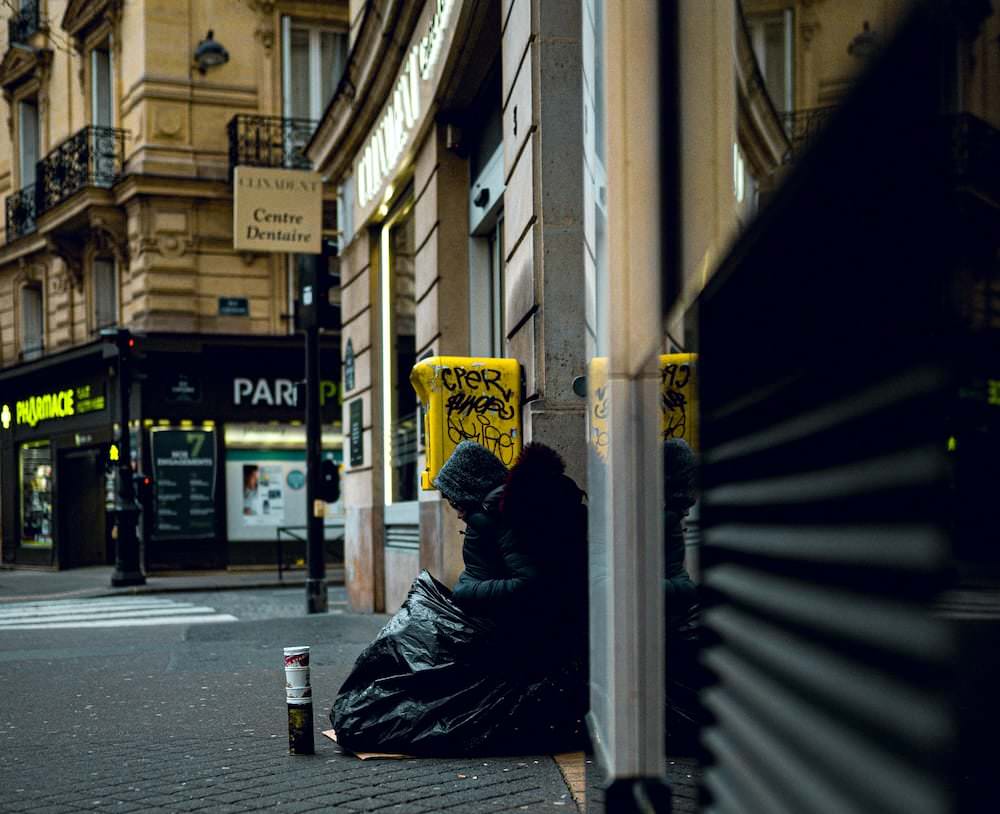
In French, several terms are used to refer to people who are homeless. Some are neutral and administrative, while others are older or more colloquial, and may carry connotations of pity or stigma. The two most commonly encountered terms are SDF and clochard. Other related terms include sans-abri, sans domicile, and marginal.
SDF
SDF is an abbreviation for sans domicile fixe, meaning “without a fixed address.” It is the most common and neutral term used in official language, journalism, and public services.
Examples:
- Un centre d’accueil pour les SDF a ouvert dans le quartier.
A shelter for homeless people has opened in the neighbourhood. - Il a vécu comme un SDF pendant plusieurs années.
He lived as a homeless person for several years. - Les SDF sont particulièrement vulnérables pendant l’hiver.
Homeless people are especially vulnerable during winter.
The term SDF can be both countable (un SDF, des SDF) and used as a category. It avoids the more loaded connotations of older words.
Clochard
Clochard is an older, more literary or colloquial term. It traditionally refers to someone who lives on the streets, often with an image of wandering, poverty and detachment from society. It can carry connotations of marginalisation or even romanticised vagabondage in literature, but in modern usage it is often seen as outdated or pejorative.
Examples:
- Il est devenu clochard après avoir perdu son emploi et sa famille.
He became homeless after losing his job and his family. - Ce film raconte l’histoire d’un clochard philosophe à Paris.
This film tells the story of a philosopher vagabond in Paris. - Le mot “clochard” est de moins en moins utilisé dans les médias.
The word “clochard” is less and less used in the media.
In some contexts, clochard might be used with a tone of sympathy or nostalgia, but in formal or respectful language it is often avoided.
Sans-abri
Sans-abri is another neutral and descriptive term meaning “without shelter.” It can be used as a noun or an adjective. It is slightly less common than SDF but is still widely understood.
Examples:
- Les sans-abri dorment souvent dans les gares ou les stations de métro.
Homeless people often sleep in train stations or metro stations. - Une aide d’urgence a été mise en place pour les personnes sans abri.
Emergency assistance has been set up for people without shelter. - Il a été déclaré sans-abri après avoir été expulsé.
He was declared homeless after being evicted.
Marginal
Marginal is a broader term that refers to someone living outside the norms of society. It may or may not imply homelessness. It can also describe someone who chooses an alternative lifestyle.
Examples:
- Il vit en marginal, sans travail ni domicile.
He lives as an outsider, without work or a home. - Les marginaux sont parfois stigmatisés par la société.
Marginalised people are sometimes stigmatised by society. - C’est un artiste marginal qui refuse les conventions.
He is an outsider artist who rejects conventions.
This term can refer to voluntary or involuntary separation from mainstream society. It is often used in social or psychological discussions.
Sans domicile
The phrase sans domicile is sometimes used on its own in formal or administrative contexts, especially in longer constructions like personne sans domicile. It is similar in meaning to SDF but less common as a standalone noun.
Examples:
- Les personnes sans domicile peuvent bénéficier de certains services sociaux.
People without a fixed address can access certain social services. - Le nombre de personnes sans domicile a augmenté cette année.
The number of people without a home has increased this year.
This phrasing is often used in official reports and census data.