rez-de-chaussée
The French term rez-de-chaussée refers to the ground floor of a building—that is, the level at ground height, directly accessible from the street. It corresponds to what Australians (and the British) call the “ground floor.” This differs from American English, where the same level is called the “first floor.” The distinction is essential when booking accommodation, using a lift, escalator or elevator, or reading French building plans.
1. Literal meaning and etymology
Rez-de-chaussée comes from rez (a shortened form of ras, meaning “level with”) and chaussée (“road” or “paved ground”). The expression literally means “level with the road.”
Examples:
- Un appartement au rez-de-chaussée. – A flat on the ground floor.
- Le salon est au rez-de-chaussée, les chambres sont à l’étage. – The living room is on the ground floor, the bedrooms are upstairs.
2. Usage in everyday French
The term is extremely common and used in all forms of speech and writing, from property listings to hotel descriptions and everyday conversation. It is a masculine noun, usually preceded by le or au.
Examples:
- Ils habitent au rez-de-chaussée. – They live on the ground floor.
- Le restaurant se trouve au rez-de-chaussée de l’hôtel. – The restaurant is on the ground floor of the hotel.
- L’entrée du musée est au rez-de-chaussée. – The entrance to the museum is on the ground floor.
3. Variants and related expressions
a. Rez-de-chaussée surélevé
This means a “raised ground floor.” It refers to a ground floor that is slightly higher than street level, often reached by a short flight of stairs.
- L’appartement est au rez-de-chaussée surélevé. – The flat is on a raised ground floor.
b. Sous-sol
This is the level below the rez-de-chaussée, equivalent to a basement or cellar.
- Le garage est au sous-sol. – The garage is in the basement.
c. Premier étage
This is the level above the rez-de-chaussée. In France and most of Europe, the premier étage corresponds to what Australians call the “first floor.”
- Les bureaux sont au premier étage. – The offices are on the first floor.
4. Common contexts
a. In property descriptions
Estate agents and rental listings frequently use rez-de-chaussée to indicate location within a building.
- Appartement de deux pièces au rez-de-chaussée avec jardin. – Two-room ground-floor flat with garden.
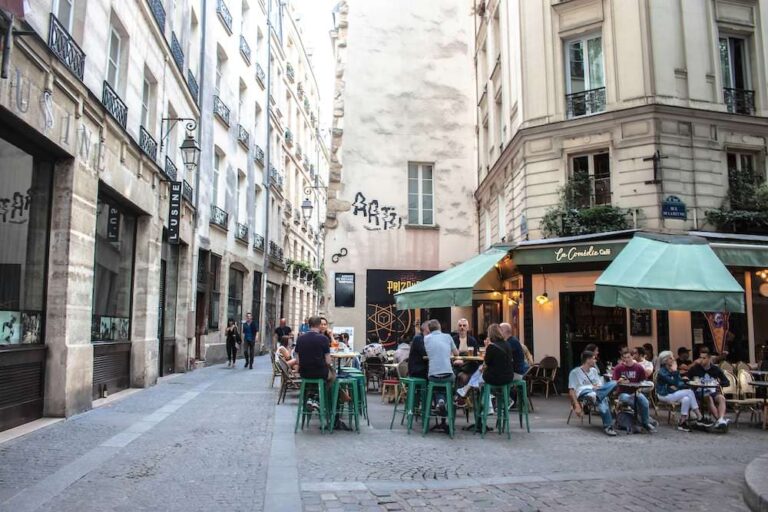
- Commerce en rez-de-chaussée. – Ground-floor shop.
b. In hotels and public buildings
You will often see it on lift buttons, signs, or directories.
- RDC is the common abbreviation, used on lift panels and building directories.
Examples:
- Appuyez sur le bouton “RDC” pour le rez-de-chaussée. – Press the “RDC” button for the ground floor.
- Le hall d’accueil se trouve au RDC. – The reception hall is on the ground floor.
5. Cultural and practical points
- In France, the rez-de-chaussée is not counted as an “étage” (storey). The premier étage is the floor above it.
- Apartments on the rez-de-chaussée are often cheaper because they may be noisier or offer less privacy. However, they can be sought after by people with reduced mobility.
6. Grammar and pronunciation
- Gender: masculine (le rez-de-chaussée).
- Plural: les rez-de-chaussée (invariable form; no added s on chaussée).
- Pronunciation: [ʁɛ də ʃose].
- Typical prepositions: au rez-de-chaussée (on the ground floor), du rez-de-chaussée (from the ground floor).
Examples:
- Ils descendent au rez-de-chaussée. – They are going down to the ground floor.
- Les bureaux du rez-de-chaussée ferment à 18 heures. – The ground-floor offices close at 6 p.m.
Summary
- Rez-de-chaussée means “ground floor,” i.e. the level at street height.
- It is masculine, pronounced [ʁɛ də ʃose], and abbreviated RDC.
- The level above is the premier étage (“first floor” in French, “second floor” in Australian English terms).
- Related terms include rez-de-chaussée surélevé (raised ground floor) and sous-sol (basement).
- In writing, the plural is les rez-de-chaussée with no additional s.