trempé comme une soupe

The French saying “trempé comme une soupe” means literally “soaked like a soup.” It means “soaked,” “wet” or “completely wet.”

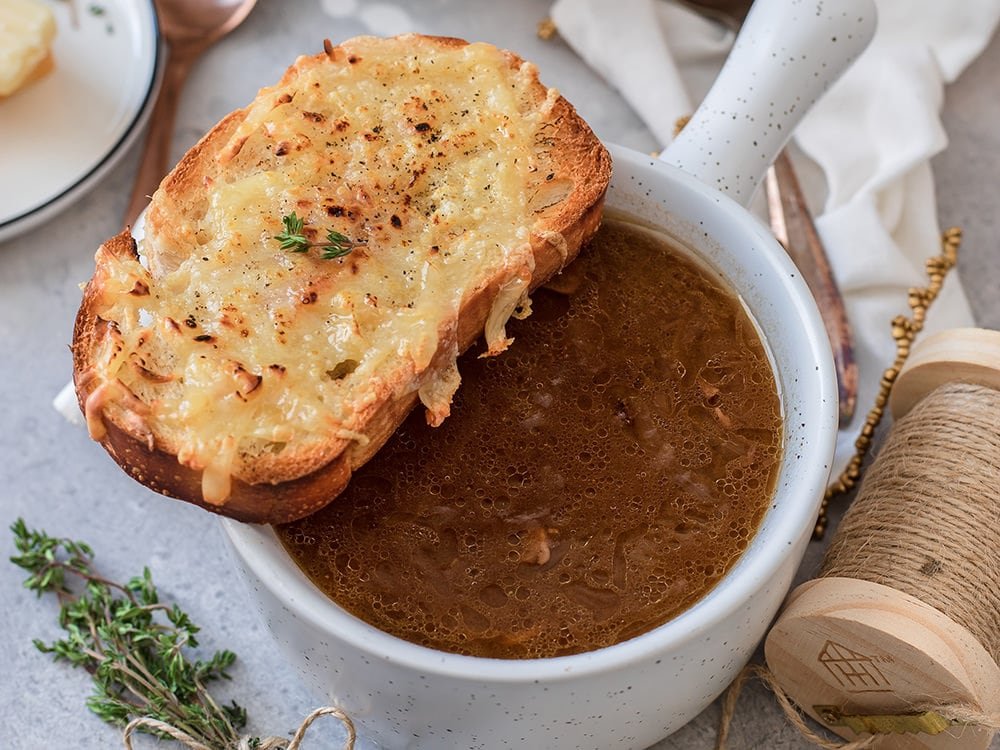
This is a very old idiom whose exact origins are unknown. It sounds like it is stating the obvious, since a soup is, by definition, wet. But “soupe” originally meant the slice of bread that was dipped into the soup and then withdrawn in a state that was “as wet as a soup,” or “wet like a soup.”

Over time, the word “soupe” has come to mean the liquid part of the soup, not the bread that is dipped into it.

The nearest English equivalents to this saying are “wet to the skin” or “soaked to the bone.”
Don’t miss new articles!

Get 1 email a week with new articles about French

We don’t spam! Read more in our privacy policy

Similar Posts

  • le tour & la tour

    Unraveling the Distinction: “Le Tour” vs. “La Tour” in French There are a few words (homonyms) in French where the same word with the same spelling exists, but there is one meaning for the masculine version and a completely different meaning for the feminine version. So when speaking or listening, it is important to distinguish…

  • le parti & la partie

    Homonyms are words that share the same spelling or pronunciation but have different meanings. In this article, we’ll delve into two French homonyms: “parti” and “partie.” Meaning and Usage 1. Le parti: 2. La partie: Etymology 1. Le Parti: Latin Origin: The word “parti” has its roots in the Latin word “partitus,” which is the…

  • Occupe-toi de tes oignons

    Literally this expression means “occupy yourself with your onions.” But it translates into English as “Mind your own business.” It is sometimes abbreviated to “c’est pas tes oignons” or simply “pas tes oignons” (none of your business, or “not your onions”). One theory as to the origin of this expression comes from the word “l’oigne,” which…

  • faire le beau

    Faire le beau is a fixed French expression with two main uses. Its original, literal use applies to dogs and means to beg or sit up obediently to please someone. By extension, when applied to people, it means to show off, seek approval, flatter, or behave in an ingratiating way. The expression is common in…

  • cuiller/cuillère

    The French word “la cuiller” means “the spoon.” It can also be spelled “la cuillère,” which is a spelling that more accurately reflects its pronunciation (KWEE YAIR). Both spellings are accepted in modern French. The spelling of “la cuillère” has recently become more popular, however, due to its more logical connection with standard French phonetics…

  • détendre

    The French Verb “Détendre”: Unraveling Layers of Relaxation The French verb “détendre” means “to relax,” “to loosen,” “to untighten,” “to release” or even “to entertain.” It also has a reflexive version, “se détendre,” which also means “to relax” or “to slacken.” Etymology:“Détendre” comes from the Latin words, “de” (down from) and “tendere” (to stretch). Usage:…