hors d’œuvres
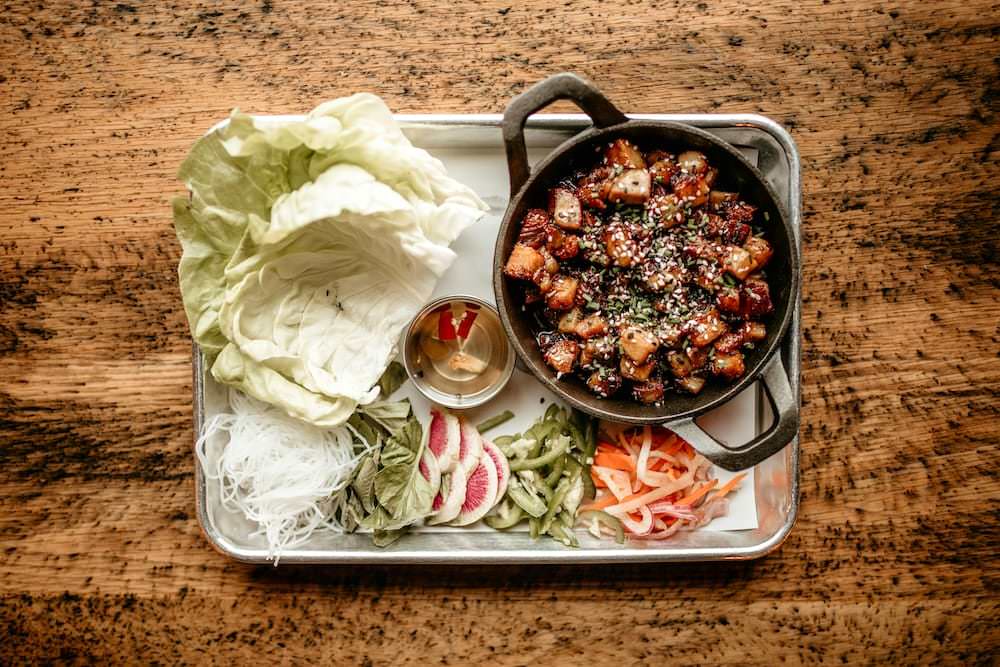
The term hors d’oeuvres refers to small dishes of food served before a meal. They are meant to be eaten in one or two bites. They are often passed around on trays at parties or set out on a table for guests to take for themselves. The idea is to take the edge off hunger while people wait for the main meal, or to accompany drinks at a cocktail party.
The phrase is French. It comes from hors d’oeuvre, which means “outside of the work.” The oeuvre here is the main work of the meal. These small foods are served outside of that main work. The term was not always about food. In the 1500s, it was an architectural word. It described small buildings like a gazebo, built apart from a main house but still part of the property. By the late 1600s, French cooks had taken the word and given it a new, culinary meaning.
Some food historians think this new meaning came from French chefs working in Russia. They saw the Russian custom of serving small dishes of fish, meat and caviar before a meal, a practice called zakuski. They brought the idea back to France. Hors d’oeuvres became popular in French dining in the 1700s and 1800s. In America, they became common in the 20th century, especially with the rise of the cocktail party.
Common types of hors d’oeuvres
- Canapés: Small pieces of bread or toast with a savory spread and a topping like meat, cheese or fish.
- Crudités: Raw vegetables like carrot sticks or celery, often served with a dip.
- Deviled eggs: Hard-boiled eggs cut in half, with the yolk mixed with spices and put back in.
- Pigs in a blanket: Small sausages baked inside a small pastry.
- Tartlets: Very small baked tarts with a savory filling.
Synonyms and related terms
- amuse-bouche or amuse-gueule
- This means “mouth amuser.” It is a single, very small dish from the chef, given for free to start the meal. It is meant to please the mouth and show the cook’s skill. Gueule is a slang word for mouth.
- Le chef a offert un amuse-bouche aux clients.
“The chef offered a small appetizer to the customers.”
- mise en bouche
- This is another phrase for a small starter. It is close to amuse-bouche but less common. It means “putting in the mouth.”
- La mise en bouche était un petit velouté de potiron.
“The starter was a small pumpkin soup.”
- petits fours
- These are very small, often fancy, savory or sweet bites. They are sometimes served at the end of a meal with coffee, or as part of a cocktail party spread alongside hors d’oeuvres.
- Ils ont servi des petits fours salés avec le champagne.
“They served small savory bites with the champagne.”