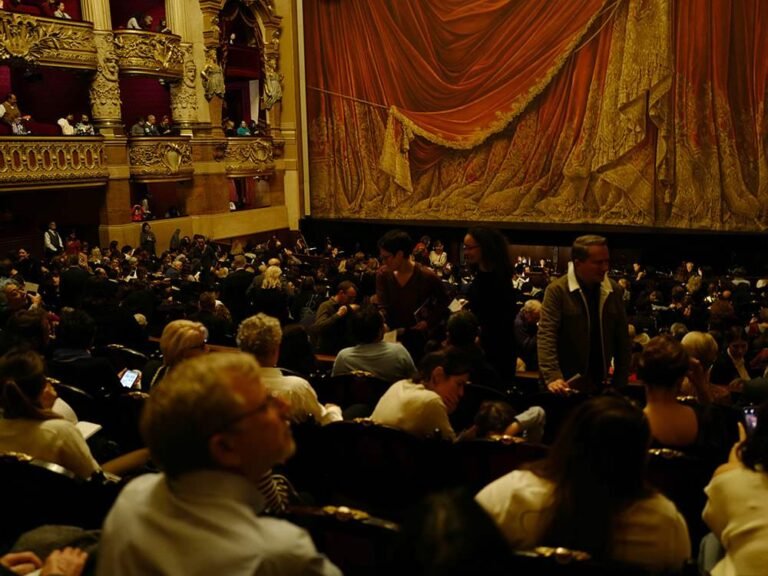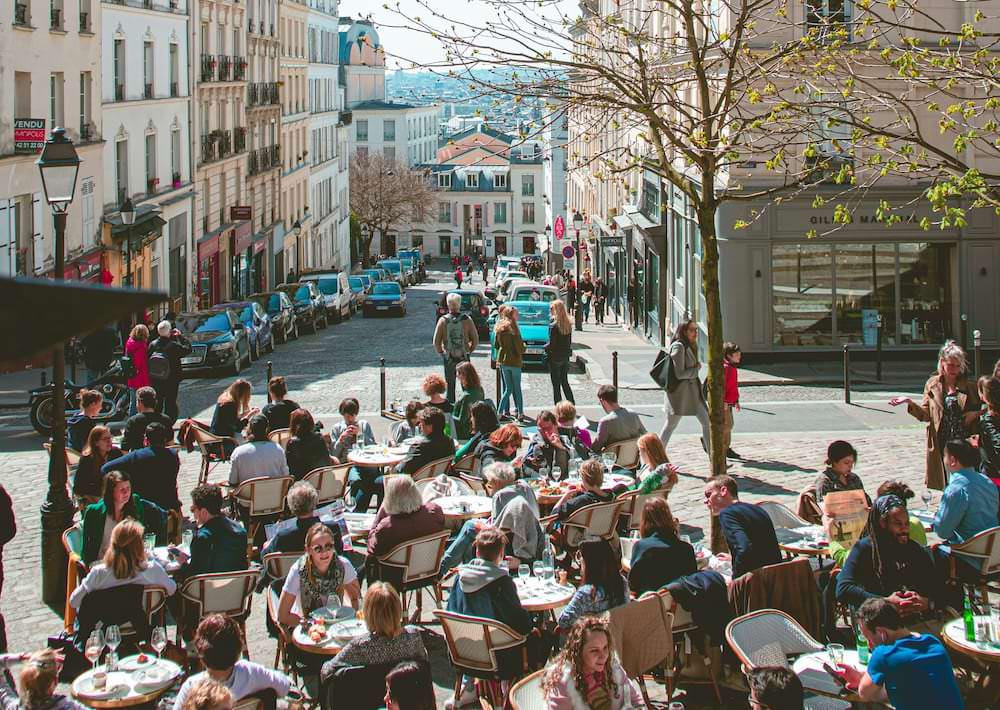
people
There are several French words for “people,” including personne, gens, peuple, monde, âme, populations, public and individu.
personne
Personne means a single person. It is feminine even for a man.
It often follows une (a) or la (the). It can be used with an adjective after it.
Examples:
- Il y a une personne dans la rue.
“There is a person in the street.” - C’est une bonne personne.
“That is a good person.” - La personne que j’ai vue portait un chapeau.
“The person I saw was wearing a hat.” - Je cherche une personne qui parle anglais.
“I am looking for a person who speaks English.”
Personne alone can also mean “nobody,” but that is a different word. Watch the context.
gens
Gens means people in a general, collective way. It is always plural. It takes masculine adjectives in front and feminine adjectives after, but this rule is old and many French speakers ignore it. Safer to use masculine forms.
Examples:
- Les gens sont gentils ici.
“People are nice here.” - Beaucoup de gens aiment le café.
“Many people like coffee.” - Les jeunes gens sortent le samedi soir.
“Young people go out on Saturday night.”
Do not use gens for a specific, numbered group. Do not say trois gens. Say trois personnes.
peuple
Peuple means a people, a nation, or the common people as a political or cultural body. It is singular and takes masculine forms.
Examples:
- Le peuple français a voté.
“The French people voted.” - Un peuple sans histoire est un peuple heureux.
“A people without history is a happy people.” - Le pouvoir appartient au peuple.
“Power belongs to the people.”
Peuple is not used for a random crowd. It carries weight. It means a group bound by land, language, or tradition.
other words for people
monde – means “world” but also “people” in the sense of a crowd or many folks.
- Il y a du monde au marché.
“There are many people at the market.” - Tout le monde est là.
“Everyone is there.”
population – means population. Cold and statistical.
- La population de Paris est grande.
“The population of Paris is large.”
public – means audience or general public.
- Le public a applaudi.
“The audience applauded.”
individu – means individual. Often negative or formal.
- Un individu suspect a été vu.
“A suspicious individual was seen.”
âme – means soul. Used for counting in a poetic or old-fashioned way.
- Il n’y a pas une âme dans la rue.
“There is not a soul in the street.”
synonyms and alternatives
For personne: individu (formal or suspicious), être humain (human being)
For gens: monde (as in du monde), les gens has no direct one-word synonym
For peuple: nation (more political), population (more statistical), la foule (the crowd)
summary
- Personne = one person. Singular. Feminine.
- Gens = people in general. Plural. Mostly masculine adjectives.
- Peuple = a people, a nation. Singular. Political or cultural.
- Monde = crowd or “everyone.” Used with tout or du.
- Population = statistical.
- Individu = single person, often odd or suspect.
- Âme = poetic counting.
Do not mix trois gens. Say trois personnes.
Do not use peuple for a small group of strangers.
Do not use personne for a whole nation.