shortened nouns ending in -o or -os
French speakers shorten long words by cutting off the end and adding o or os.
This makes speech faster and more casual.
The style started in working-class slang and spread to everyday talk.
It works like saying “rhino” for “rhinoceros” in English.
Most of these words are masculine. Plural often adds s, but some stay the same.
pronunciation of the final s
In gratos and matos, the final s is pronounced.
Say “gra-toss” and “ma-toss.”
This is different from most French words where final s is silent.
Other o words like apéro, resto, bobo have no final s, so no issue.
Words like dermato, gastro, intello, prolo, vélo, pédalo also have no final s.
common examples
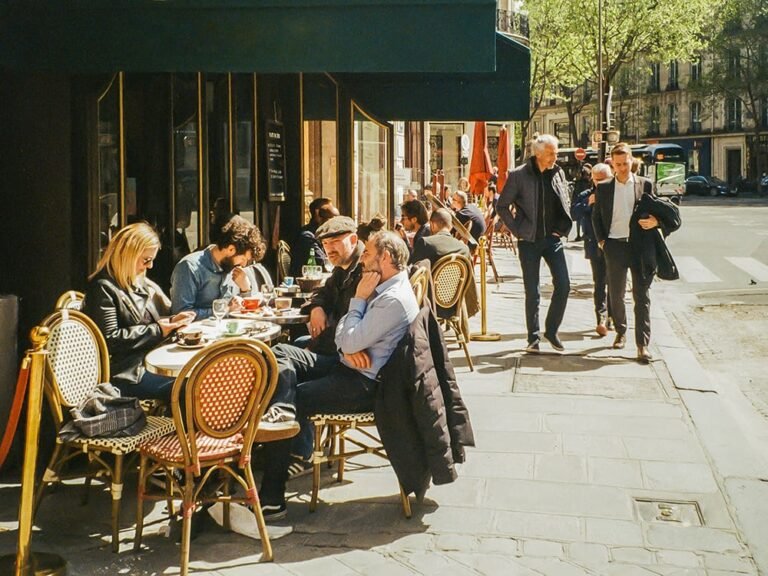
apéro – short for apéritif (pre-meal drink)
- On prend un apéro ce soir ?
“Shall we have a drink before dinner tonight?”
bobo – short for bourgeois bohème (a well-off, left-wing, culturally trendy person)
- Ils vivent dans un quartier bobo avec des magasins bio.
“They live in a bobo neighborhood with organic shops.” - Les bobos aiment le café artisanal et les vinyles.
“Bobos like craft coffee and vinyl records.”
dermato – short for dermatologue (skin doctor)
- Je dois prendre rendez-vous chez le dermato.
“I need to make an appointment with the skin doctor.”
dirlo – short for directeur or directrice (principal, manager)
- Le dirlo a convoqué les profs.
“The principal called the teachers in.”
gastro – short for gastro-entérite (stomach flu)
- Toute la famille a eu la gastro.
“The whole family had the stomach flu.”
gratos – short for gratuit (free, no cost). Pronounce the final s.
- Le concert était gratos. Pas besoin de payer.
“The concert was free. No need to pay.”
intello – short for intellectuel (intellectual, often mocking)
- Ce livre est un peu intello, mais intéressant.
“This book is a bit intellectual, but interesting.”
matos – short for matériel (equipment, gear). Pronounce the final s.
- Il faut du bon matos pour faire de l’escalade.
“You need good gear to go climbing.”
McDo – short for McDonald’s
- Les étudiants mangent souvent au McDo.
“Students often eat at McDonald’s.”
pédalo – a pedal boat. The shortening is old and no longer felt as one.
- On a loué un pédalo sur le lac.
“We rented a pedal boat on the lake.”
prolo – short for prolétariat or prolétaire (working class, or a working-class person)
- Il a des goûts de prolo, mais l’argent ne lui manque pas.
“He has working-class tastes, but he is not short of money.”
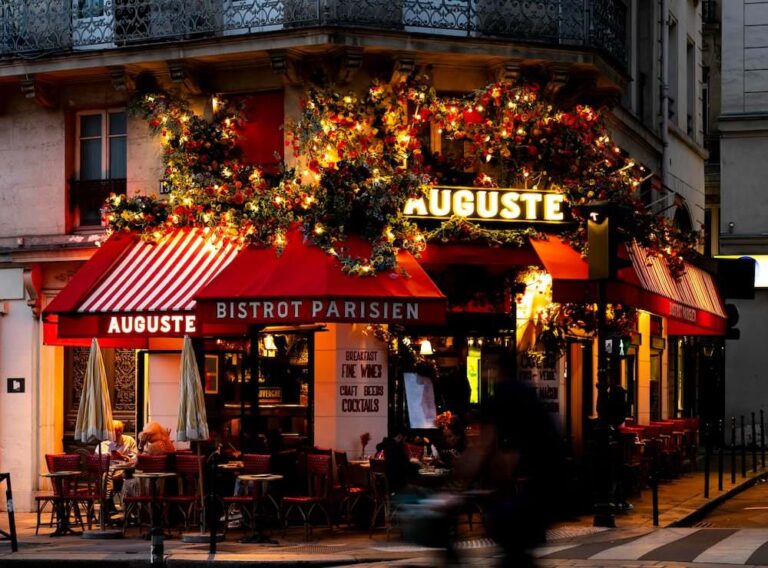
resto – short for restaurant
- Je vais au resto avec des amis.
“I am going to the restaurant with friends.”
vélo – short for vélocipède (bicycle)
- Il va au travail en vélo.
“He goes to work by bike.”
usage notes
These are informal but not rude. You can use apéro with your boss. Avoid prolo unless you know the tone is right. Bobo is mildly mocking but widely used in news and talk. McDo is common in ads and conversation.
Some take an s in plural: des restos, des apéros, des bobos.
Matos and gratos stay the same in plural. The s is part of the word. Say du matos (some gear) and des matos (different types of gear), with the s pronounced each time.
Examples:
- J’ai acheté du nouveau matos pour la cuisine.
“I bought new gear for the kitchen.” - Les dermatos sont débordés en été.
“Skin doctors are swamped in summer.” - On va au resto ou on fait un apéro à la maison ?
“Shall we go to a restaurant or have a drink at home?” - Ce quartier est devenu trop bobo à mon goût.
“This neighborhood has become too bobo for my taste.”
synonyms
| abbreviation | full form | synonym |
|---|---|---|
| apéro | apéritif | un verre avant le repas |
| bobo | bourgeois bohème | cadre aisé de gauche, néo-bourgeois |
| intello | intellectuel | un cerveau (slang, smart person) |
| matos | matériel | l’équipement, le barda (slang) |
| gratos | gratuit | offert, sans frais |
| prolo | prolétaire | ouvrier, classe populaire |
| resto | restaurant | une brasserie, un boui-boui (cheap) |
summary
French shortens long nouns by chopping the end and adding o or os.
These words are casual, spoken, and widely used.
Common examples include apéro, bobo, matos, gratos, resto, and McDo.
In matos and gratos, the final s is pronounced. Most others have no final s.
Plurals work like normal French, except matos and gratos stay the same.
Do not use them in formal writing. Do use them with friends.