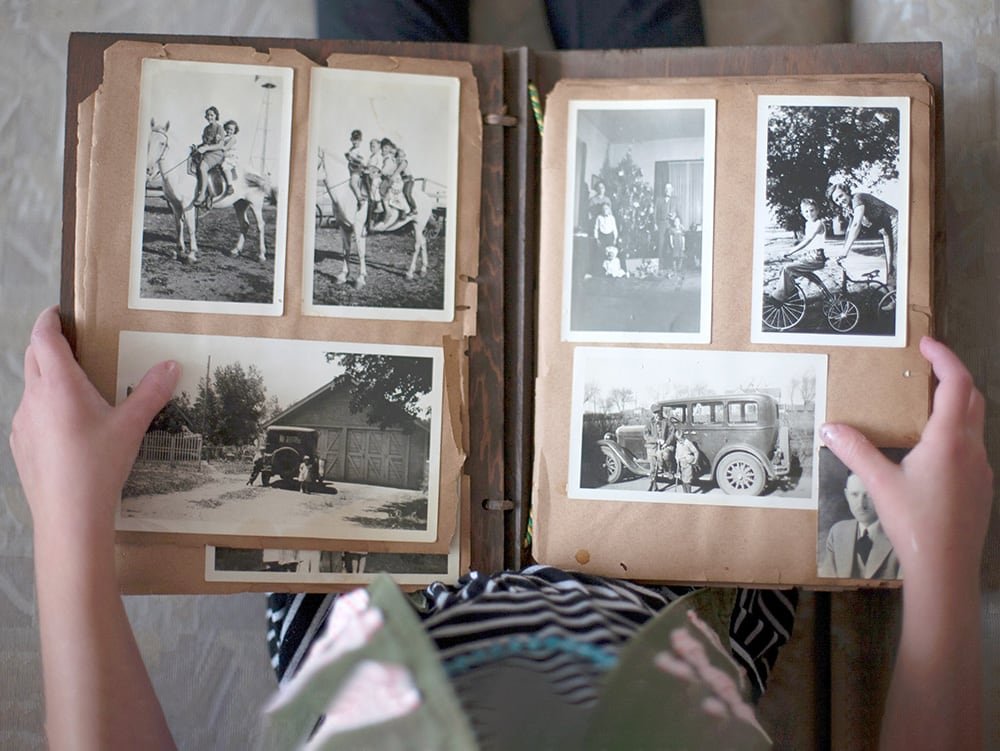
Verb: se souvenir de
“Se souvenir de” is the French verb meaning “to remember.” It is a reflexive verb and is always followed by “de,” or preceded by its equivalent “en.”
Usage examples of “se souvenir de”:
- Je me souviens de notre première rencontre. (I remember our first meeting.)
- Elle se souvient de ses grands-parents. (She remembers her grandparents.)
- Nous nous souvenons de la date de notre anniversaire. (We remember our anniversary date.)
- Ils se souviennent de leur enfance avec émotion. (They remember their childhood with emotion.)
Using “En” to Replace “It” or “Them”:
In French, the pronoun “en” is often employed with “se souvenir de” to replace previously mentioned things or ideas. It acts as a versatile pronoun, helping to avoid repetition and maintain fluency in speech.
- J’ai visité Paris l’année dernière. Je m’en souviens très bien. (I visited Paris last year. I remember it vividly.)
In this example, “en” replaces the need to repeat “Paris,” making the sentence more concise and elegant.
Conjugation in the Present Tense and Passé Composé:
The verb “se souvenir de” is conjugated in the same way as the irregular verb “venir.”
Present Tense:
| Pronoun | Conjugation in Present Tense |
|---|---|
| Je | me souviens de |
| Tu | te souviens de |
| Il/Elle | se souvient de |
| Nous | nous souvenons de |
| Vous | vous souvenez de |
| Ils/Elles | se souviennent de |
Passé Composé:
The passé composé of “se souvenir de” is formed by using the auxiliary verb “être” in the present tense, followed by the past participle of “se souvenir,” which is “souvenu.”
| Pronoun | Conjugation in Passé Composé |
|---|---|
| Je | me suis souvenu(e) de |
| Tu | t’es souvenu(e) de |
| Il/Elle | s’est souvenu(e) de |
| Nous | nous sommes souvenu(e)s de |
| Vous | vous êtes souvenu(e)(s) de |
| Ils/Elles | se sont souvenu(e)(s) de |
The Etymology of “Se Souvenir De”:
The verb “se souvenir de” traces its origins to the Latin verb “subvenire,” which means “to come up from below” or “to come to mind.” This Latin root evolved into the Old French verb “sovenir,” later incorporating the reflexive pronoun “se” to create the modern French verb “se souvenir de.”